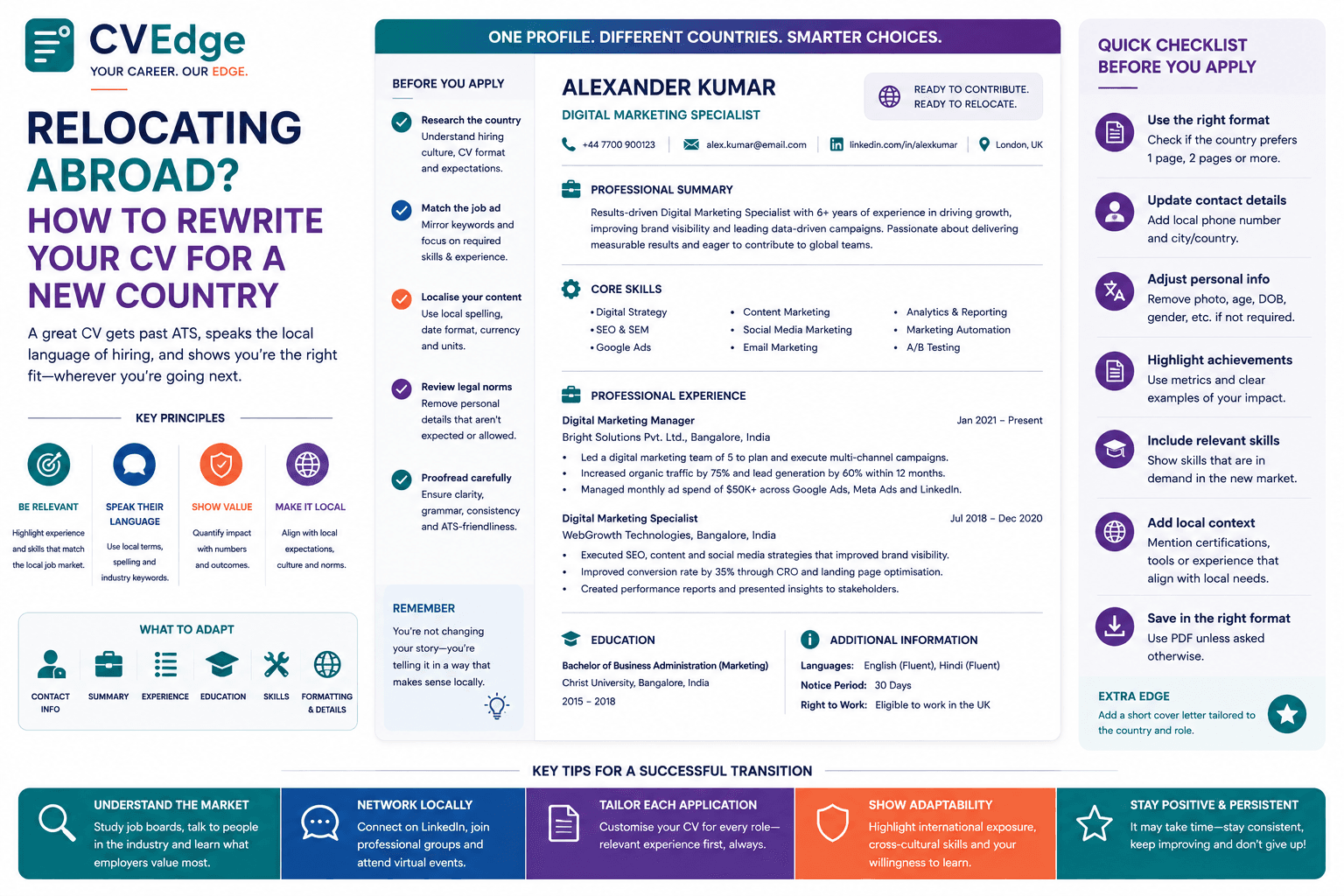
Relocating Abroad? How to Rewrite Your CV
Every country guide tells you what that country expects. This one is the method underneath them: a repeatable process you can run against any market, so the eighth country takes twenty minutes rather than an afternoon.
Start by checking what a parser currently extracts from your CV with our free ATS Resume Checker.
Step 1: Answer the Work Rights Question First
Before formatting, before wording, before anything: can this employer hire you, and how hard is it?
Every hiring manager in every country asks this, and in most markets it is the first filter applied. Put the answer in one line under your contact details. Citizen, permanent resident, specific permit with expiry, or sponsorship required.
Two rules. Do not hide it: being discovered late costs you the relationship and wastes everyone's time. Do not overstate it. This is verified before any offer completes.
Where a country runs a shortage occupation list or a fast-track route and you qualify, note it. It is genuinely useful information for the employer.
Step 2: Translate Your Credentials
A degree from one country means nothing to a recruiter in another unless they can place it.
Most destination countries have a credential recognition body: WES and ICAS for Canada, UK ENIC for Britain, NZQA for New Zealand, the EQF mapping across the EU, and equivalents elsewhere. Where you have an assessment, state the equivalency on the CV directly.
BE Computer Science, Anna University: assessed as equivalent to a Canadian four-year bachelor's degree (WES, 2025)
If you have not had an assessment done and you are serious about the market, get one. It converts an unknown into a known.
Regulated professions are a separate track. Engineering, healthcare, law, accountancy, teaching and the trades usually require registration with a local body, and that process is independent of your visa. State your registration status honestly: in process, eligibility letter received, exam passed, fully registered. Never imply a registration you do not hold.
Step 3: Give Every Employer a Descriptor
This is the highest-value, lowest-effort change most relocating candidates can make, and almost nobody does it.
A recruiter who does not recognise your employer cannot calibrate your seniority. A director at a company they have never heard of might be running a 200-person division or might be one of four people. They will not guess in your favour.
Add five to eight words after each employer name:
Flipkart (e-commerce marketplace, ~$8B GMV, 20,000+ employees), Senior Product Manager
Emirates NBD (UAE's largest bank by assets), Risk Analyst
Do the same for universities that are strong locally but unknown abroad: national ranking, or the qualification's standing.
Step 4: Convert the Units
Small changes, disproportionate effect on how native the document reads.
- Currency. Convert to the destination currency, or state the original explicitly: "€4.2M (INR 380M)". Never leave an unlabelled number that could be read as the wrong currency by an order of magnitude.
- Dates. DD/MM/YYYY in most of the world, MM/DD/YYYY in the US. Better still, write the month as a word to remove the ambiguity entirely.
- Measurements. Metric almost everywhere, imperial in the US.
- Spelling. American, British, or the local language convention.
- Phone number. International format with the country code, always.
Step 5: Apply the Local Convention Layer
This is where the country guides come in. The variables that actually change:
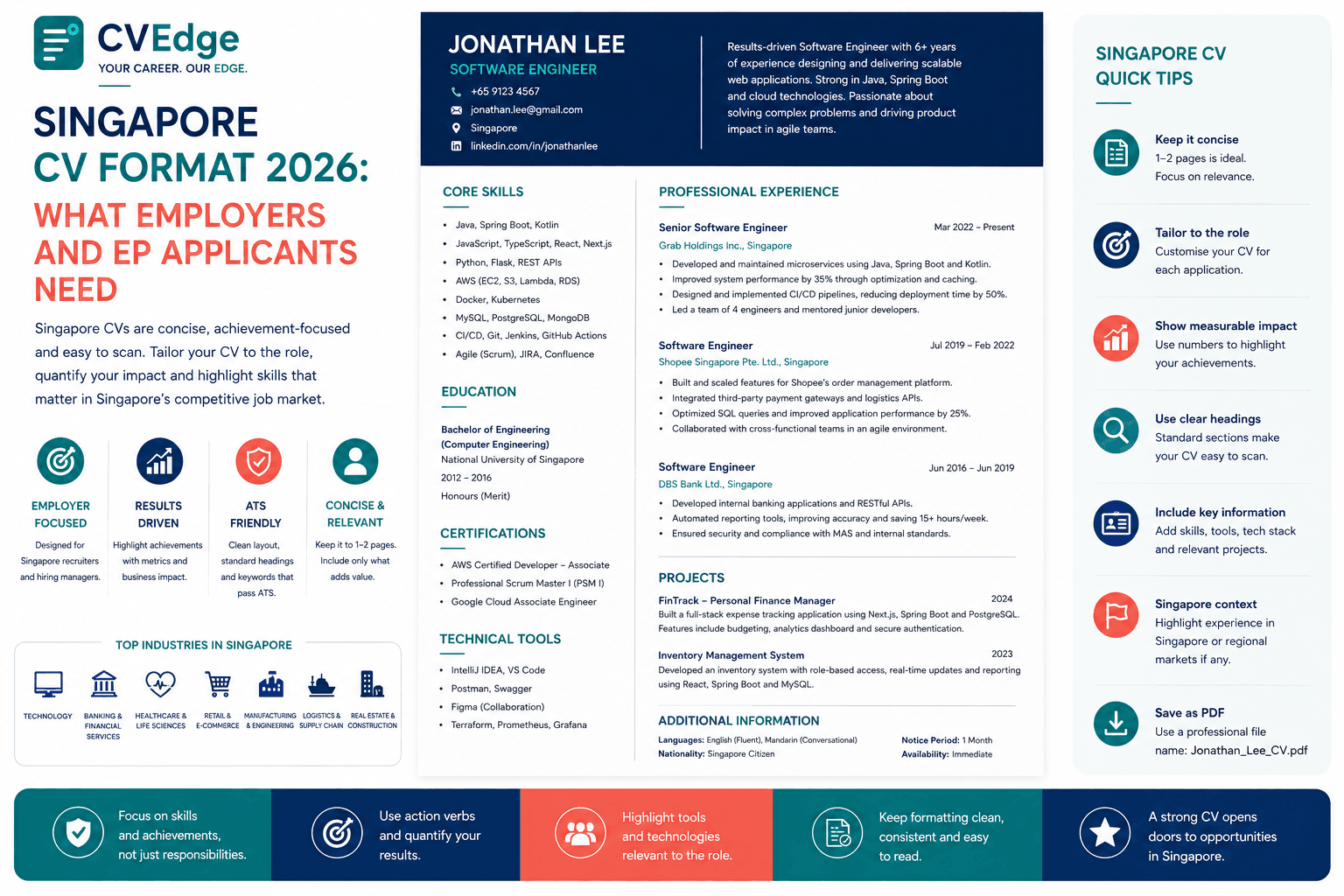
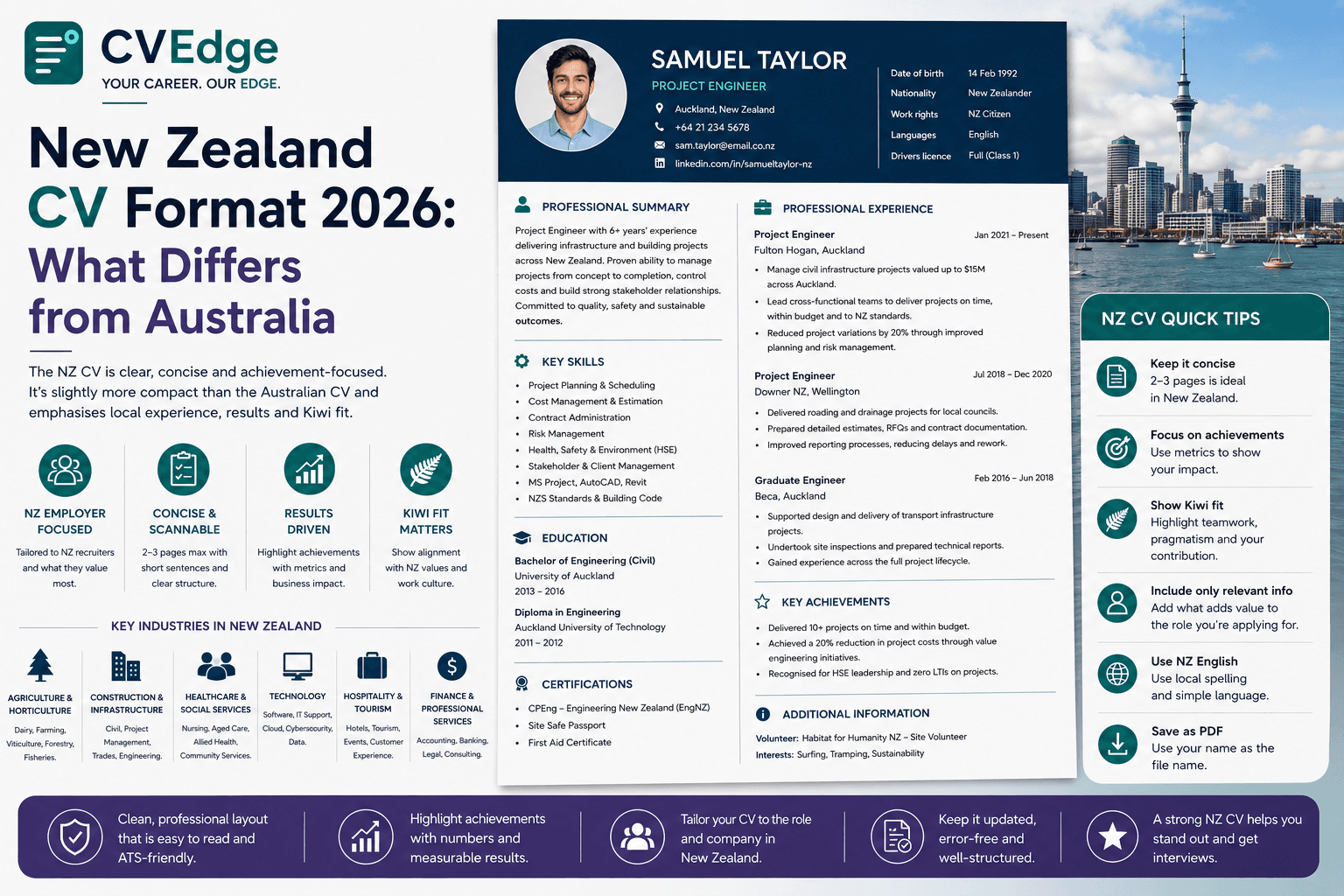
- Length: one page in the US, two in the UK and Netherlands, two to three in Australia and the Gulf, three-plus for energy and academia
- Photograph: expected in Switzerland, common in Germany, declining in the Gulf, never in the US, UK, Ireland, Canada or Australia
- Personal details: date of birth and nationality still appear in parts of Europe and the Gulf; they are removed entirely in the Anglo-American markets
- References: named and expected in Ireland, the Netherlands, New Zealand; omitted in the US
- Cover letter: required in Germany and Switzerland, commonly read in the UK and Ireland, frequently ignored in US high-volume hiring
- Additional documents: Zeugnisse in Germany and Switzerland, selection criteria in Australia, dataflow and licensing evidence in Gulf healthcare
Step 6: Localise the Keywords, Not Just the Words
Job titles and technical vocabulary differ across markets even in a shared language.
What is a "fresher" in India is a "graduate" in the UK and "entry-level" in the US. A "CTC" means nothing outside South Asia. "Notice period" is standard in India, the UK and the Gulf and unusual in the US. "Sanitation worker", "cleaner" and "custodian" describe the same role in three markets.
Read five or six real postings in the destination market for your role, and take the vocabulary from them. That is also the keyword set an ATS will be matching against. Our guide on tailoring your CV for a job description covers the method.
Step 7: Check the Parse Before You Send
Every adaptation above is wasted if the file does not parse. Applicant tracking systems are near-universal among large employers in every market covered here.
Single column, standard headings, no tables or text boxes for content that matters, PDF unless the posting asks otherwise.
Keep One Master, Cut Many Versions
Maintain a complete master record with everything in it: every role, every number, every credential. Then cut a targeted version per market. Cutting from a full record is fast; rebuilding from a trimmed one is not.
Country Guides
- UK · Ireland · Germany · Netherlands · Switzerland
- Canada · Australia · New Zealand · Singapore
- UAE · Saudi Arabia · Qatar · Kuwait, Oman, Bahrain
Next Step
Run each localised version through our free ATS Resume Checker before you send it.
Templates That Parse Cleanly
Every layout below is single-column and free to use. Preview and edit any of them in the CVEdge resume builder, or browse all 32 in the template library.
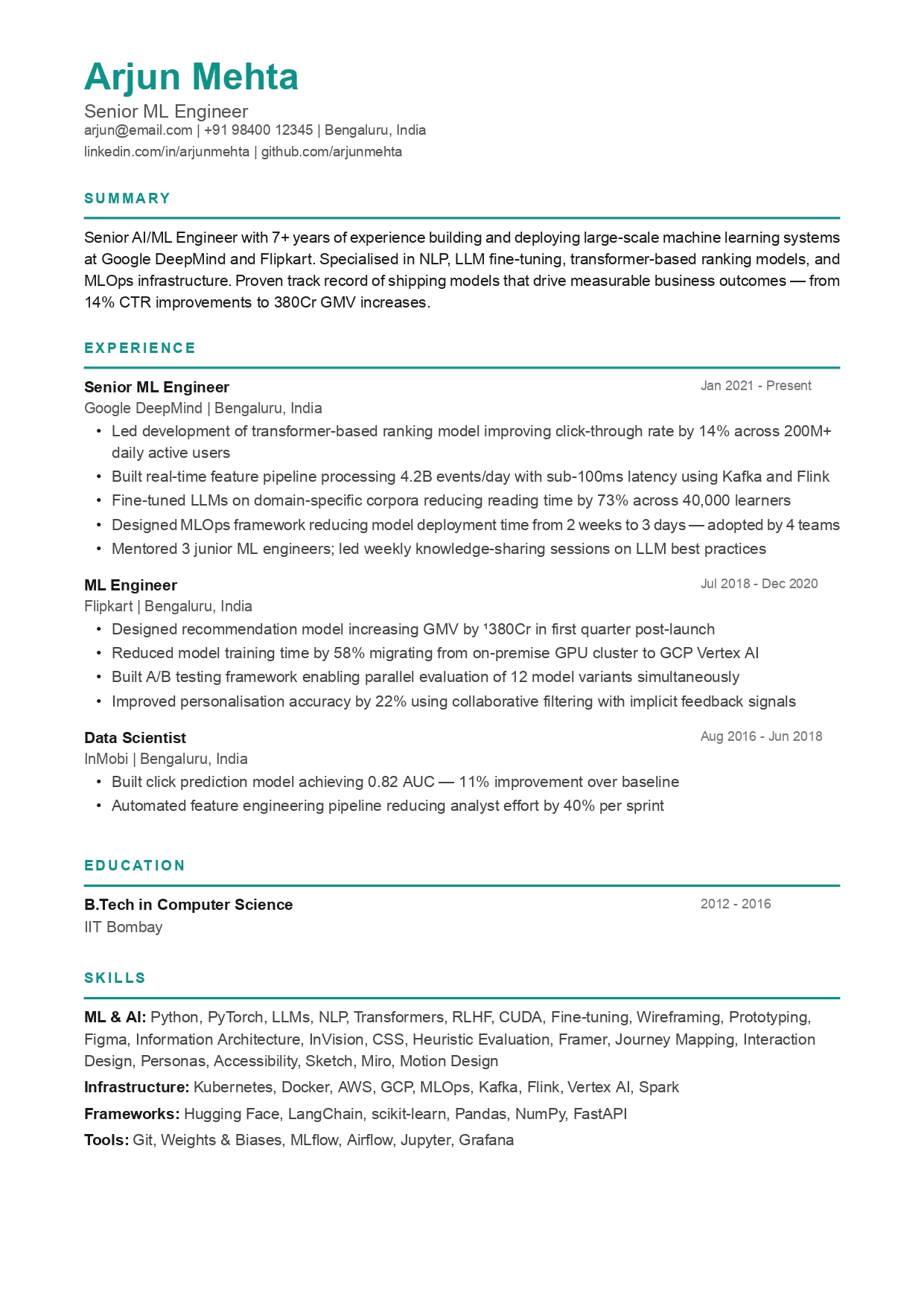
Classic ATS Resume Template: Standard headings, no graphics, parses cleanly through Greenhouse, Workday, Lever and iCIMS. The default if you are unsure.
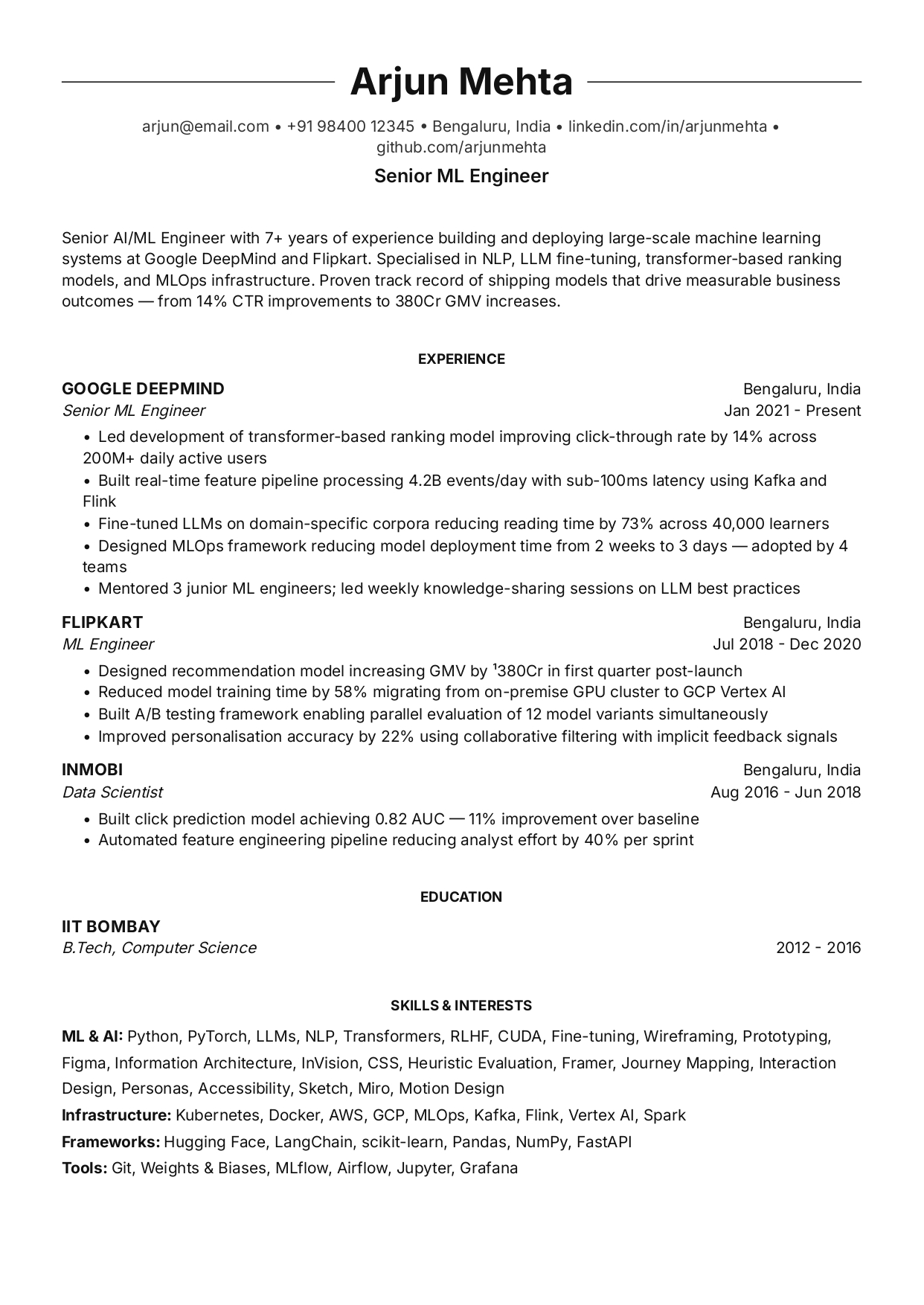
Harvard ATS Resume Template: Single-column, academic-standard layout. The most-viewed template on CVEdge and the safest choice when you do not know which ATS you are up against.
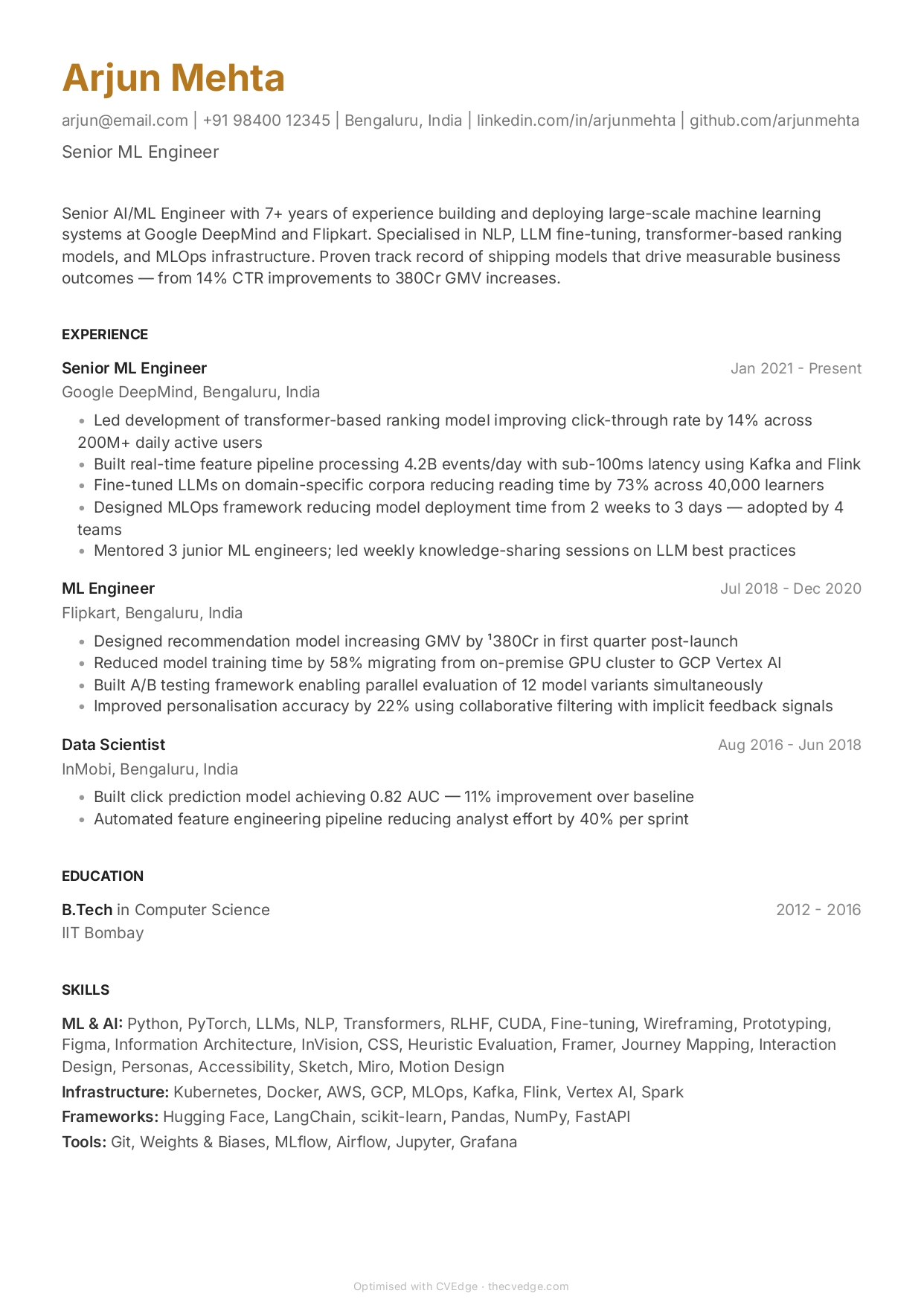
Minimal ATS Resume Template: Maximum content in minimum space, useful when you need to hold a two-page limit without cutting substance.