Canadian Resume Format 2026
Canadian resume convention is closer to American than to European, but the differences that exist matter, and for candidates applying from overseas, the adaptation is mostly subtraction.
Check your current document with our free ATS Resume Checker before you start editing.
Remove These Fields
Canadian human rights legislation restricts what employers may consider in hiring. Most employers respond by discarding or redacting resumes carrying protected characteristics, because holding that information creates risk for them.
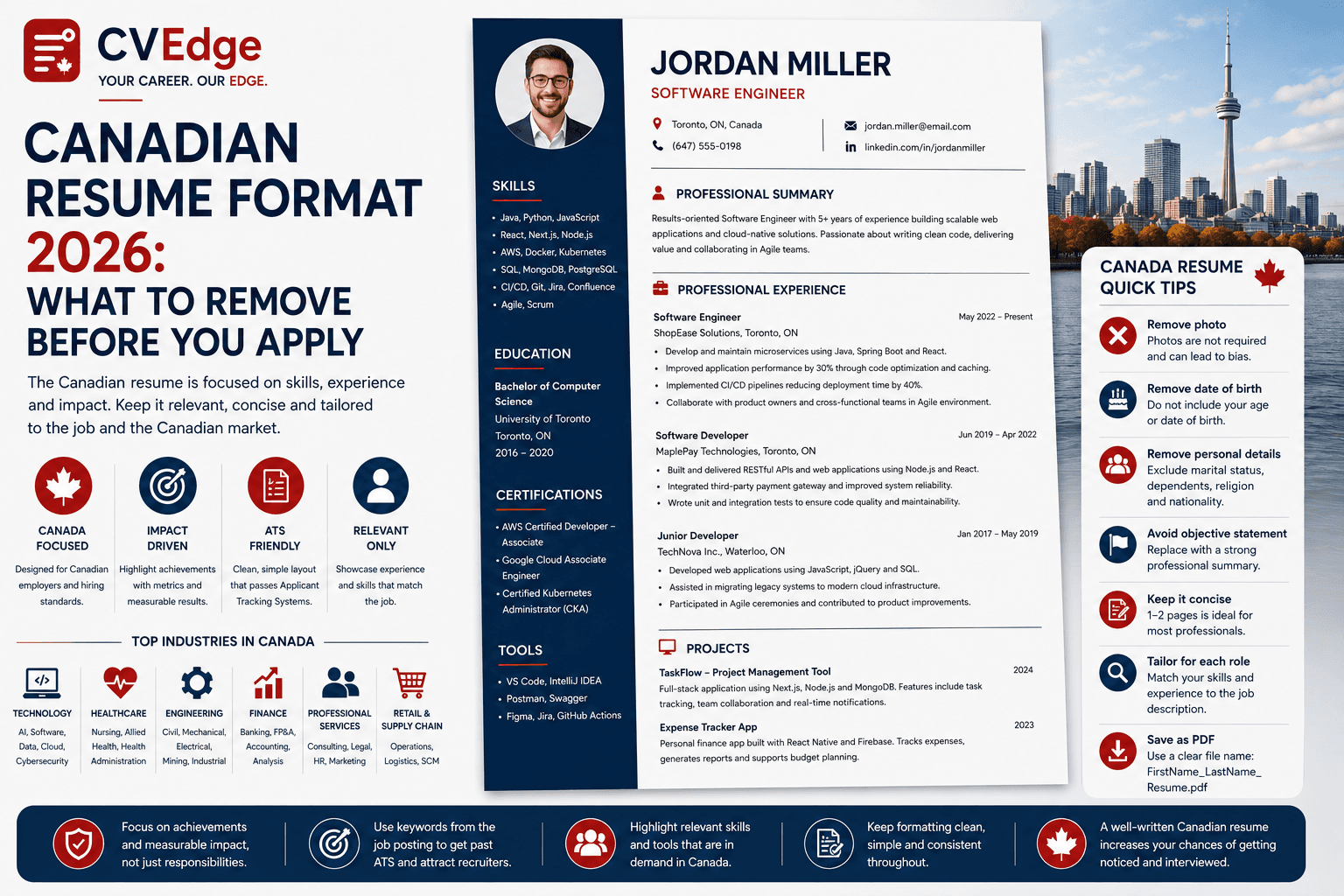
Remove: photograph, date of birth, age, marital status, nationality, religion, gender, health status, and Social Insurance Number.
This is not a stylistic preference. A photo on a Canadian resume can get the application set aside by a recruiter who does not want it in their file.
Also remove your full street address. City and province is standard: "Toronto, ON". Some candidates omit location entirely when applying across provinces; that is acceptable, though a local address does help for on-site roles.
State Your Work Authorisation
The one thing to add rather than remove.
Canadian employers need to know whether hiring you requires an LMIA or work permit sponsorship. Put it in one line under your contact details: Canadian citizen, permanent resident, open work permit holder with validity dates, or requiring sponsorship.
If you hold a Post-Graduation Work Permit or an open permit, say so: it removes a major barrier and many recruiters filter for it.
Length
One to two pages. Two is normal for anyone with more than a few years of experience; one is right for new graduates. Canada does not use the three-page European CV, and academic CVs are the only common exception.
The "Canadian Experience" Problem
Newcomers frequently encounter the expectation of Canadian experience. Some provincial human rights bodies have taken the position that requiring it can be discriminatory, but the informal preference persists in practice.
You can reduce its effect on the page:
- Contextualise overseas employers. Add a short descriptor after unfamiliar names: "Tata Consultancy Services (IT services, 600,000+ employees)". Canadian recruiters cannot calibrate seniority against companies they do not know.
- Convert credentials. If you have had your qualifications assessed by WES, ICAS or another recognised credential evaluation service, state the Canadian equivalency directly: "Bachelor of Engineering: assessed as equivalent to a Canadian four-year bachelor's degree (WES, 2025)".
- Name transferable standards. Where you have worked to standards recognised in Canada (IFRS, ISO, PMI methodology, NERC, specific vendor platforms), name them.
- Include Canadian touchpoints. Volunteer work, bridging programmes, professional association memberships, contract or freelance work for Canadian clients. Any of these counts.
Professional Licensing
Many Canadian professions are regulated provincially: engineering, accounting, nursing, teaching, law, pharmacy and the skilled trades among them. Registration bodies and requirements differ by province.
If you are licensed, state the province and the body: P.Eng (Ontario), CPA (BC), RN (Alberta). If you are in the process, state the stage you have reached. If you are not yet registered, do not imply that you are; verification is routine and a misrepresentation ends the process.
Quebec and Bilingual Roles
For roles in Quebec, French language ability is often a requirement rather than an asset, and applying in French is generally expected unless the posting is in English. State your French level honestly and specifically.
For federal government roles anywhere in Canada, bilingual capability is frequently a formal requirement with defined proficiency levels. If a posting specifies levels, address them directly.
Structure
- Name, city and province, phone, email, LinkedIn, work authorisation
- Professional summary, three or four lines
- Skills: a short keyword block
- Professional experience, reverse chronological, achievement-led with numbers
- Education, with credential equivalency where assessed
- Certifications and licences, with province
- Volunteer or community involvement: genuinely valued in Canada, more so than in most markets
Spelling and Units
Canadian spelling largely follows British convention: colour, centre, licence as a noun, organisation. Canadian English does use "analyze" and "organize" with a z. Use metric units. Give currency figures in CAD, or state the currency explicitly if quoting overseas figures.
The ATS Layer
Widely used across Canadian mid-size and large employers, and by the federal government's own systems. Single column, standard headings, no tables or text boxes, PDF. See our guide on how ATS filters resumes.
Common Mistakes
- Photograph, date of birth or marital status left on from an overseas template
- SIN number printed on the resume
- Work authorisation not stated
- Overseas employers and degrees with no Canadian context
- Licence claimed without provincial registration
- Applying in English to a Quebec role that specifies French
Templates That Parse Cleanly
Every layout below is single-column and free to use. Preview and edit any of them in the CVEdge resume builder, or browse all 32 in the template library.
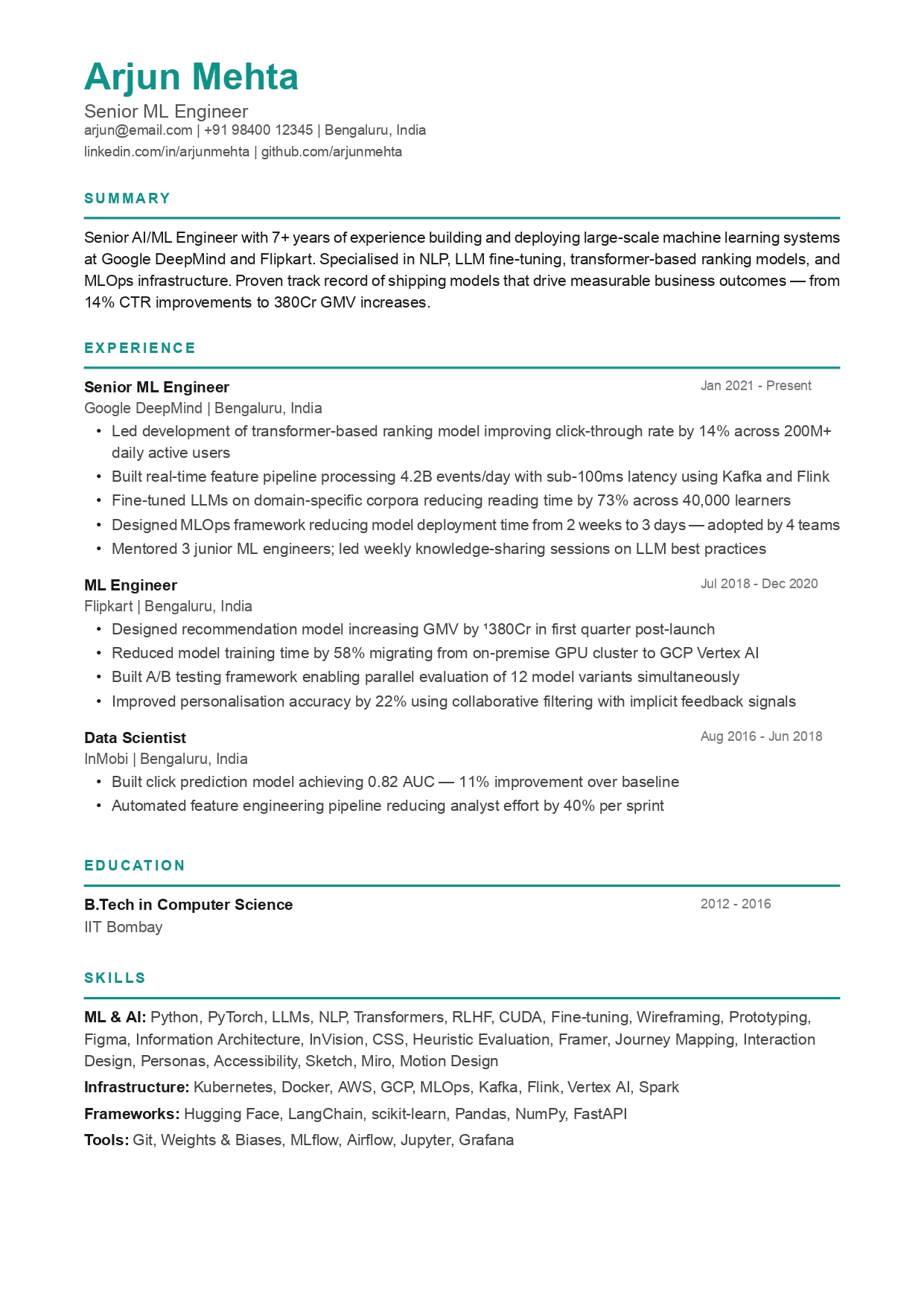
Classic ATS Resume Template: Standard headings, no graphics, parses cleanly through Greenhouse, Workday, Lever and iCIMS. The default if you are unsure.
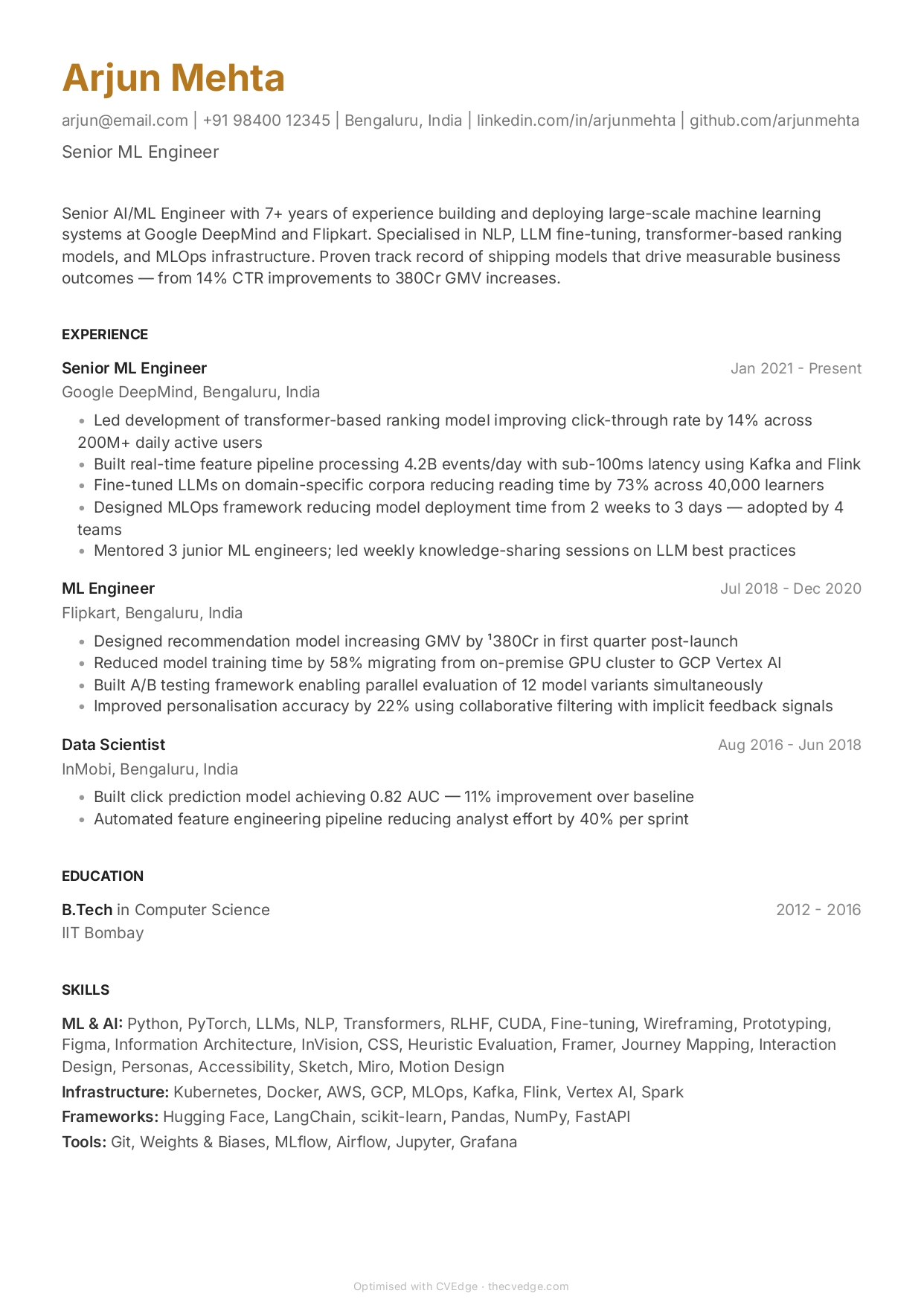
Minimal ATS Resume Template: Maximum content in minimum space, useful when you need to hold a two-page limit without cutting substance.
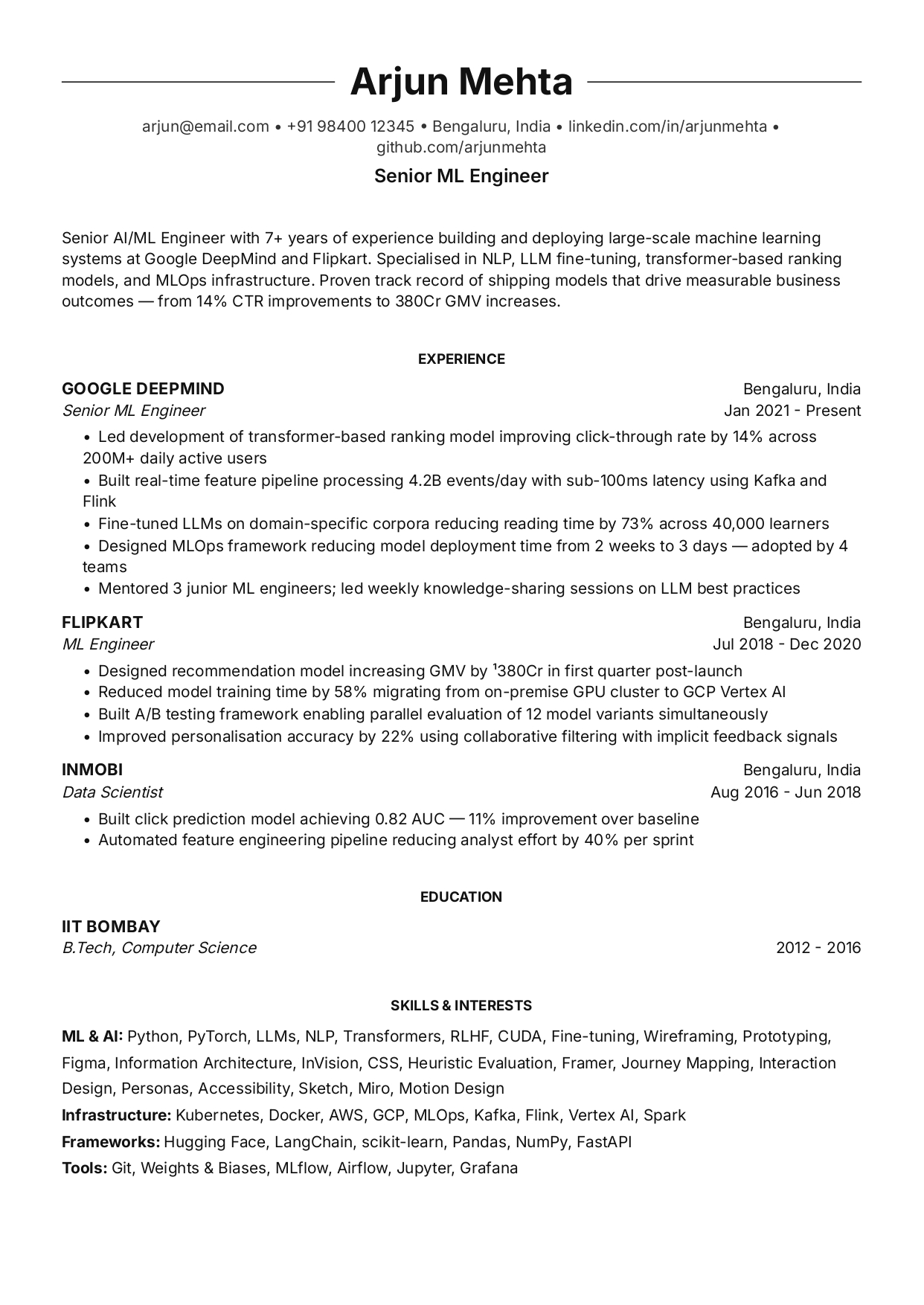
Harvard ATS Resume Template: Single-column, academic-standard layout. The most-viewed template on CVEdge and the safest choice when you do not know which ATS you are up against.
Related Guides
Frequently asked questions
What should I remove from a resume for Canada?
Photo, date of birth, age, marital status, nationality, religion, gender, health status and Social Insurance Number. Canadian human rights law restricts what employers may consider, so most redact or discard resumes carrying those fields.
Do Canadian resumes use Letter or A4 paper?
Letter (8.5 by 11 inches), the same as the United States. Set your document to Letter before exporting a PDF so it prints without scaling.
Should I state my work authorisation on a Canadian resume?
Yes, in one line: "Canadian permanent resident", "Open work permit valid to 2027", or "Requires LMIA sponsorship". It answers a screening question the recruiter would otherwise have to ask.
How long is a Canadian resume?
Two pages is normal for experienced professionals, one page for new graduates. It is closer to US convention than to European, with achievement-led bullets and reverse-chronological order.
Next Step
Check what a parser extracts with our free ATS Resume Checker.