US Resume vs European CV
"CV" and "resume" are used interchangeably in casual conversation and they are not the same document. Moving between the two markets without adapting is one of the most common reasons strong candidates get no response.
Note one terminology trap first. In the United States, a "CV" means an academic curriculum vitae (long, comprehensive, listing publications and grants) used for academic, research and medical positions. Everywhere else in the professional world, "CV" simply means the standard job application document. When a European posting asks for your CV, it is not asking for an academic document.
Check whichever version you are working from with our free ATS Resume Checker.
Side by Side
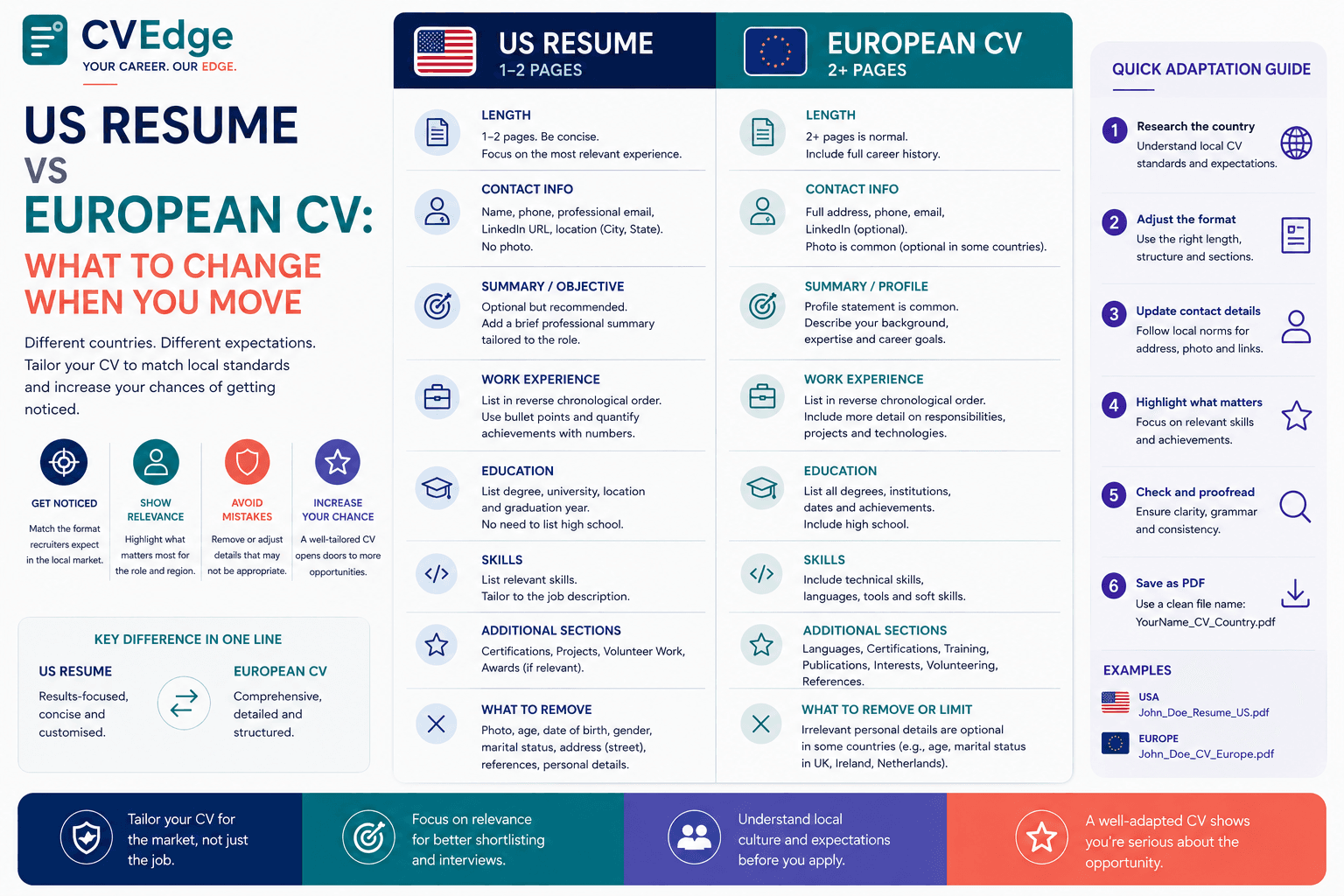
| US resume | Typical European CV | |
|---|---|---|
| Length | 1 page, 2 if senior | 2 pages, 3 at senior level |
| Photograph | Never | Varies: common in DE/CH, rare in UK/IE |
| Date of birth | Never | Still seen in DE, CH, parts of southern Europe |
| Nationality | Never | Often included; work rights always relevant |
| Marital status | Never | Legacy field, declining everywhere |
| References | "Available on request", usually omitted | Often named, expected in IE, NL, CH |
| Cover letter | Optional, often unread | Commonly expected and read |
| Tone | Promotional, achievement-forward | More restrained, varies by country |
| Dates | Years, sometimes months | Month and year, gaps noticed |
| Spelling | American | British or local language |
Moving a US Resume to Europe
Expand it. Your one page is too compressed. Two pages is the European standard, and a one-pager reads as a candidate who has not done much. Use the extra space on scope and context: what the organisation was, what you owned, what changed.
Add month-level dates and close the gaps. European recruiters read chronology carefully. A three-month gap left unexplained gets noticed in Germany or Switzerland in a way it would not in the US.
Adjust the register. American resume language is promotional by default: "spearheaded", "transformational", "best-in-class". In the Netherlands, Germany and the Nordics, that reads as noise or as overclaiming. Keep the numbers, cut the adjectives.
US register: Spearheaded a transformational go-to-market initiative driving explosive category growth.
European register: Launched the product in four European markets; grew revenue from €2.1M to €6.4M in 18 months.
Handle work authorisation directly. In the US you say nothing. In Europe, state it: EU citizen, permit type, or sponsorship required. Country guides: UK, Ireland, Netherlands, Germany, Switzerland.
Write a cover letter. In much of Europe it is genuinely read, and in Germany and Switzerland it is part of a required document package.
Localise spelling, dates and currency. British or local-language spelling. Day-month-year date order. Euros, pounds or francs, and state the currency when quoting US figures.
Add CEFR language levels. "French C1", not "conversational French".
Moving a European CV to the US
Cut it hard. One page for anything under about ten to twelve years of experience. Two pages maximum. American recruiters spend seconds on a first pass and a three-page document signals that you cannot prioritise.
Delete every personal field. Photograph, date of birth, nationality, marital status, gender, full address. US employers actively do not want these on file: several are protected characteristics and holding them creates legal exposure. A photo can get a resume discarded unread.
Keep only: name, city and state, phone, email, LinkedIn.
Lead with achievement, not responsibility. This is the biggest substantive change. European CVs often describe the role; American resumes describe the result.
European: Responsible for the regional supply chain function across five markets.
US: Cut regional logistics spend 22% ($3.1M) across five markets while improving on-time delivery from 87% to 96%.
Quantify everything you can defend. Dollars, percentages, headcount, timelines, volumes. American resume convention expects numbers in most bullets.
Drop the references section. Do not list referees. "References available on request" is optional and usually unnecessary.
Use American spelling and MM/DD/YYYY dates. Convert currency to USD or state the currency explicitly.
Front-load. The top third of page one carries almost all the weight. Summary and most recent role, nothing else above the fold.
What Both Markets Share
Two things do not change.
ATS. Applicant tracking systems are pervasive on both sides of the Atlantic. Single column, standard headings, no tables or text boxes, PDF. See how ATS filters resumes.
Tailoring. The same document sent everywhere underperforms in both markets. Match the keyword set to each posting: our guide on tailoring your CV for a job description covers the method.
Maintain Two Masters
Do not try to build one document that works everywhere; you will get a compromise that works nowhere. Keep a full master record, then cut a US version and a European version from it, and localise the European one per country.
Templates That Parse Cleanly
Every layout below is single-column and free to use. Preview and edit any of them in the CVEdge resume builder, or browse all 32 in the template library.
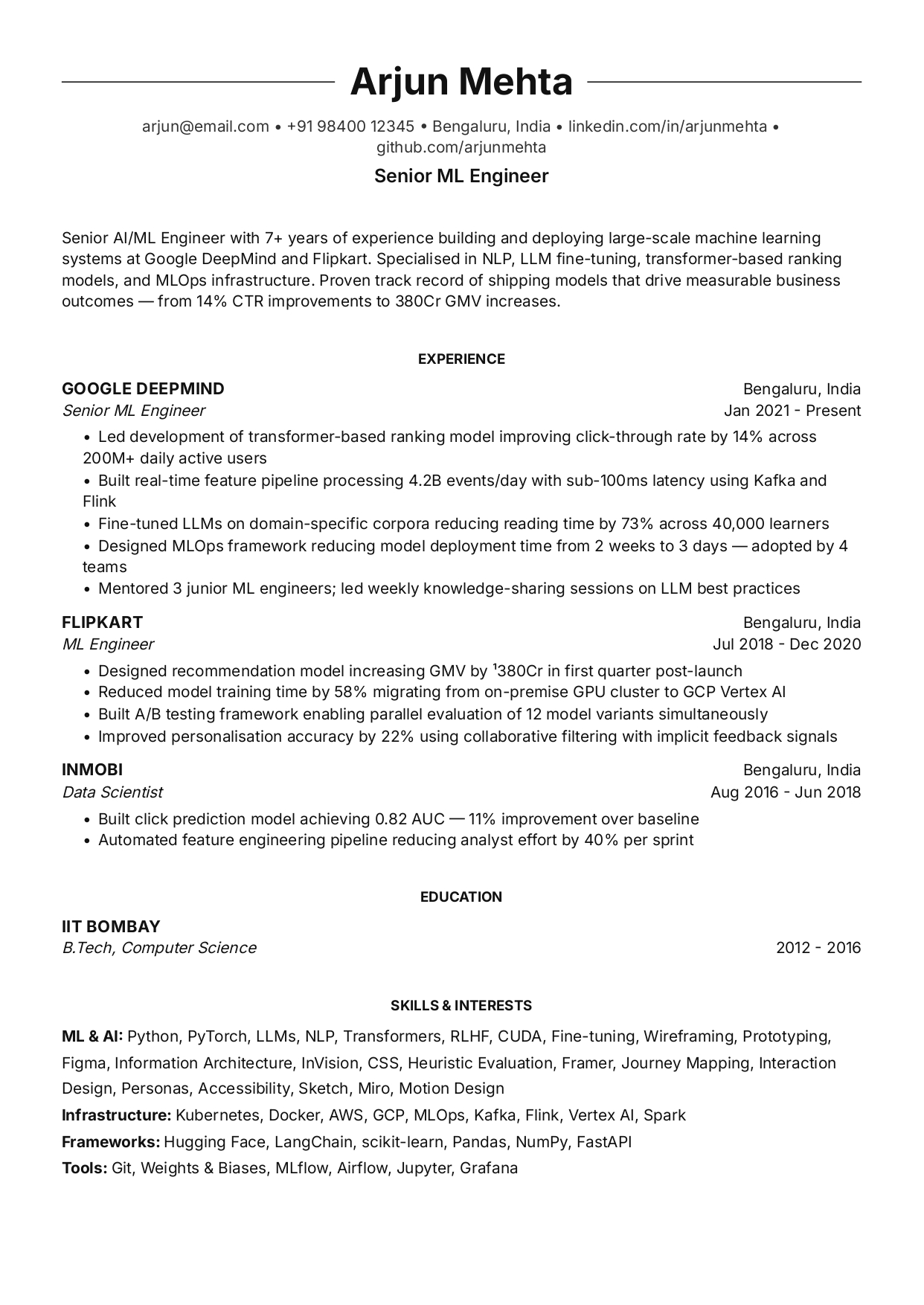
Harvard ATS Resume Template: Single-column, academic-standard layout. The most-viewed template on CVEdge and the safest choice when you do not know which ATS you are up against.
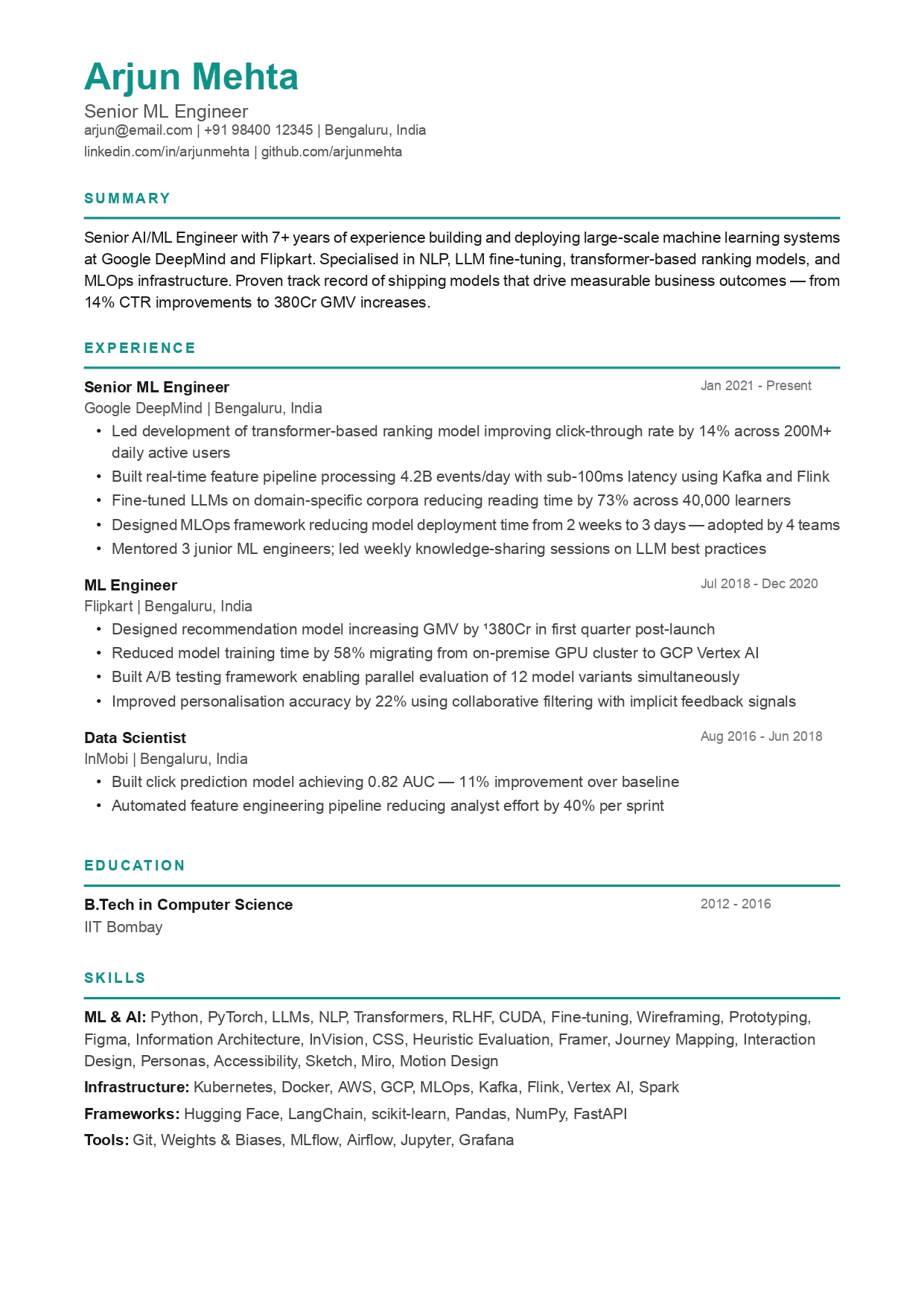
Classic ATS Resume Template: Standard headings, no graphics, parses cleanly through Greenhouse, Workday, Lever and iCIMS. The default if you are unsure.

Executive Resume Template: Built for senior candidates, it gives the summary and leadership scope room to land before the role history.
Related Guides
- UK CV Format for Skilled Worker Visa Applicants
- German Lebenslauf 2026
- Relocating Abroad? How to Rewrite Your CV
Frequently asked questions
What is the difference between a resume and a CV?
In the United States a resume is a one to two page document tailored per job, and a CV is a long academic record used in research, medicine and academia. In the UK, Europe, India and the Gulf, CV simply means the standard application document.
Should a US resume have a photo?
No, never. US employers avoid holding protected characteristics such as appearance, age or nationality, and many will discard a resume with a photo unread.
How long should a resume be in the US?
One page for up to roughly ten years of experience, two pages for senior candidates. European CVs run two pages as standard, so cut hard when converting.
Do I need a cover letter in the US?
It is optional and often unread for most private-sector roles, though some applications require one. In Germany, Switzerland and much of Europe it is part of the expected package.
Next Step
Check both versions with our free ATS Resume Checker.