
German Lebenslauf 2026
Applying in Germany is different from applying almost anywhere else, and the difference is not mainly about the CV. It is that Germany expects a complete application package (the Bewerbungsunterlagen), and an applicant who sends only a CV has submitted an incomplete application.
The package normally contains a cover letter (Anschreiben), the CV (Lebenslauf), and copies of your certificates and employer references (Zeugnisse). All three are read.
Check your current CV with our free ATS Resume Checker, then work through what Germany adds.
The Lebenslauf Itself
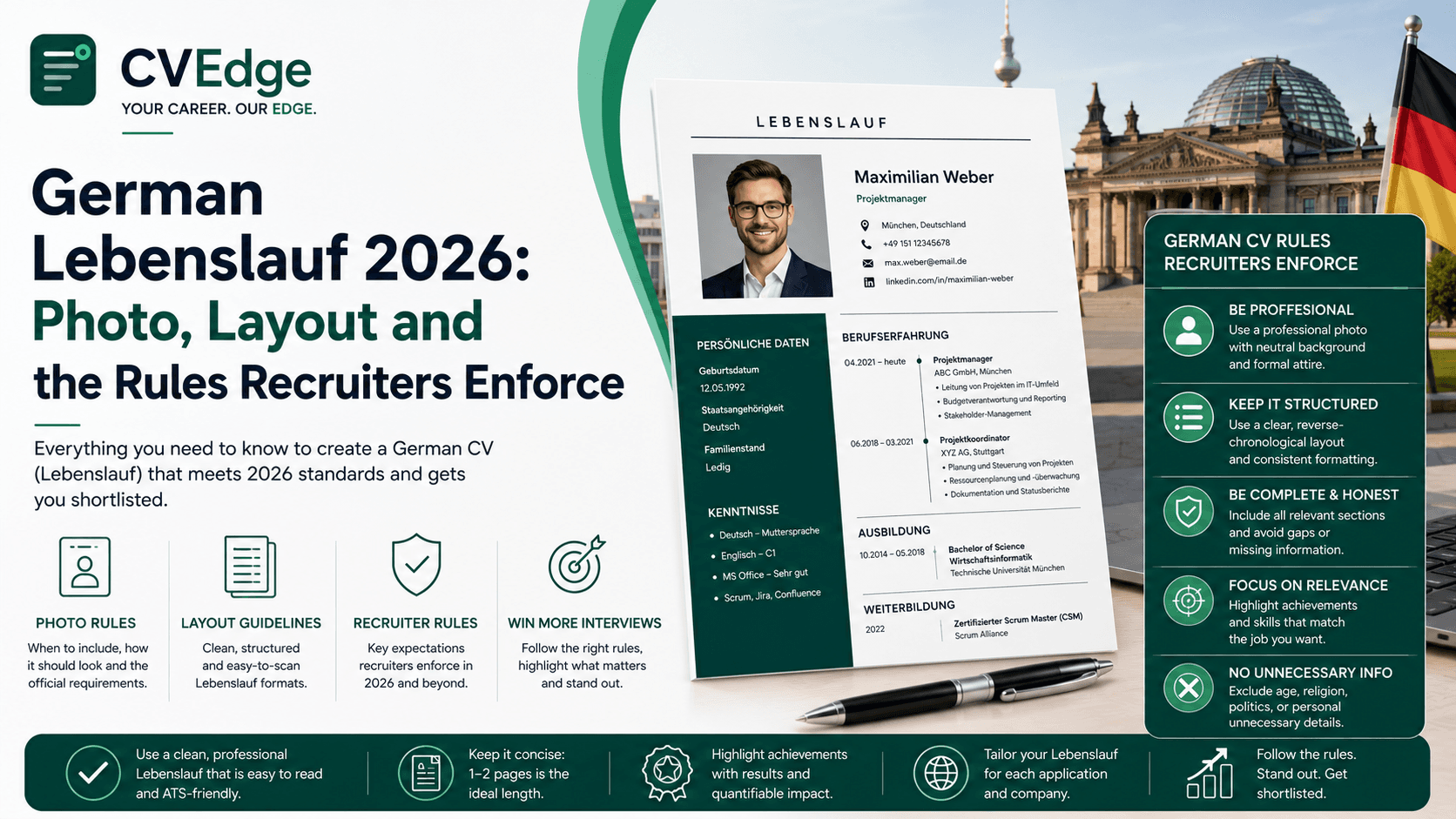
German CVs are conventionally tabular: a two-column arrangement with dates on the left and content on the right, under clear section headings. Reverse chronological order is now standard, though older German convention ran forwards and you will still see both.
There is a tension here worth naming. The classic tabular Lebenslauf is a two-column layout, and two-column layouts parse badly through applicant tracking systems. Large German employers (Siemens, SAP, Deutsche Bank, the automotive groups) run ATS. Smaller Mittelstand firms often do not.
The practical resolution: use a clean, visually tabular layout built from a single-column document structure, so a human sees the expected format and a parser reads it in the right order. Avoid actual table markup, text boxes and sidebars. Our guide on ATS resume format explains why the underlying structure matters more than the visual impression.
Length: one to two pages. Germany is stricter about concision than the Gulf or Australia.
The Photograph Question
This is the most-asked question about German applications, and the honest answer has changed.
Germany's General Equal Treatment Act (Allgemeines Gleichbehandlungsgesetz, the AGG) means employers may not discriminate on grounds including age, ethnicity and gender. Since photographs disclose all three, the legal environment discourages requiring them, and formally the photo is not required.
In practice, a professional photo remains common in German applications, particularly outside tech and outside large multinationals, and its absence is not usually penalised. Some large employers now explicitly ask applicants not to include one.
Reasonable approach: read the posting. If the employer asks for anonymised applications, comply. If you are applying to a Berlin startup or an international tech employer, omit it. If you are applying to a traditional Mittelstand company or in a client-facing role, a professional headshot is a safe conventional choice. Where you do include one, keep it top-right in a layout that does not depend on a text box.
Personal Details
German CVs traditionally carry more personal information than Anglo ones. Under the AGG this is optional, and much of it is best omitted.
Include: full name, address, phone, email. A German address, if you have one, signals local availability.
Optional and now commonly omitted: date and place of birth, nationality, marital status, number of children.
Include if relevant to hiring: your work authorisation. If you are an EU or EEA citizen, one line saying so removes a question. If you hold or need an EU Blue Card or another residence permit, state the position.
Never include: identity document numbers, Steuer-ID, or social insurance numbers.
Sections in Order
- Persönliche Daten: name and contact details
- Berufserfahrung: professional experience, with month and year for each role
- Ausbildung: education, with institution, qualification and grade where strong
- Weiterbildung / Zertifikate: training and certifications
- Kenntnisse (skills): languages with levels, IT and technical skills
- Sonstiges (optional): volunteering, memberships, publications
Two conventions to observe. German CVs use month and year for dates, not years alone, and unexplained gaps are noticed: a chronology with holes invites questions, so account for gaps briefly rather than hiding them.
Language Levels
State language ability using the Common European Framework levels (A1 to C2) rather than vague descriptors. "German B2" is information. "Good German" is not.
Be accurate. German employers test this, often in the first call. If a posting specifies C1 German and you are B1, applying is usually not productive unless the employer has said English is the working language.
Zeugnisse: The Part Overseas Applicants Miss
Germany has a formal system of employer references. On leaving a job, employees are entitled to a written reference (Arbeitszeugnis) with a conventional, coded vocabulary in which apparently mild phrasing carries specific grades of assessment.
German applications customarily include scanned copies of these references, along with degree and training certificates, appended to the application PDF.
If you are applying from a country with no equivalent system, you cannot produce them. Say so briefly in your cover letter and offer named referees instead. What you should not do is ignore the convention silently: the recruiter will notice the missing section.
The Anschreiben
One page. Addressed to a named person where you can find one. It should state the role, why this employer specifically, what you bring to the requirements they listed, your availability date, and, if the posting asks, your salary expectation (Gehaltsvorstellung). German postings request a salary figure more often than Anglo ones, and ignoring the request is read as inattentive.
Common Mistakes
- Sending a CV alone with no Anschreiben
- Genuine table markup or text boxes that break the ATS parse
- Years only, without months
- Unexplained chronology gaps
- Vague language claims instead of CEFR levels
- Ignoring a requested salary expectation
- Missing or unmentioned Zeugnisse
Templates That Parse Cleanly
Every layout below is single-column and free to use. Preview and edit any of them in the CVEdge resume builder, or browse all 32 in the template library.
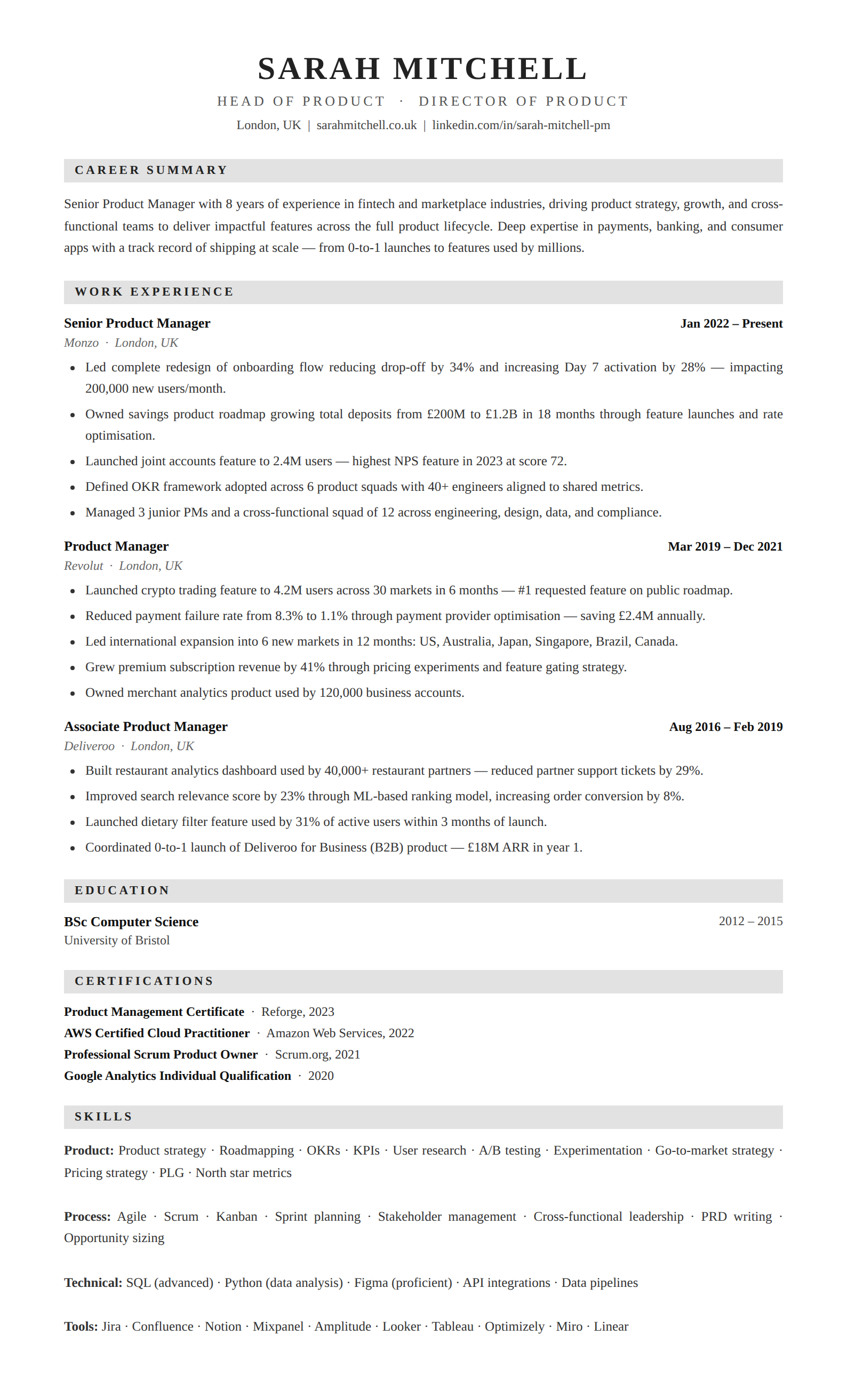
Classic Serif ATS Template: Serif typography that reads as formal and traditional, built on a single-column structure that still parses.
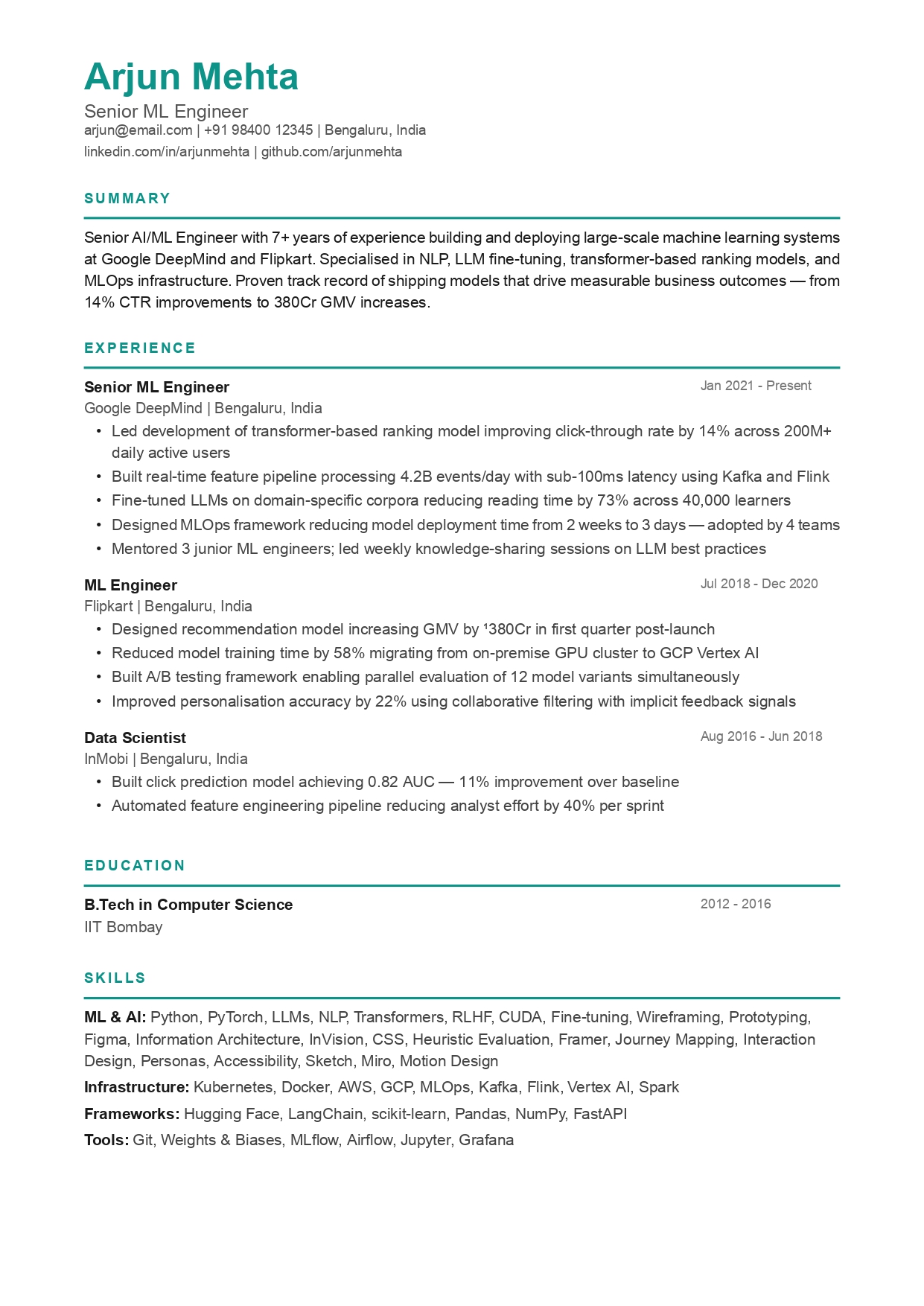
Classic ATS Resume Template: Standard headings, no graphics, parses cleanly through Greenhouse, Workday, Lever and iCIMS. The default if you are unsure.
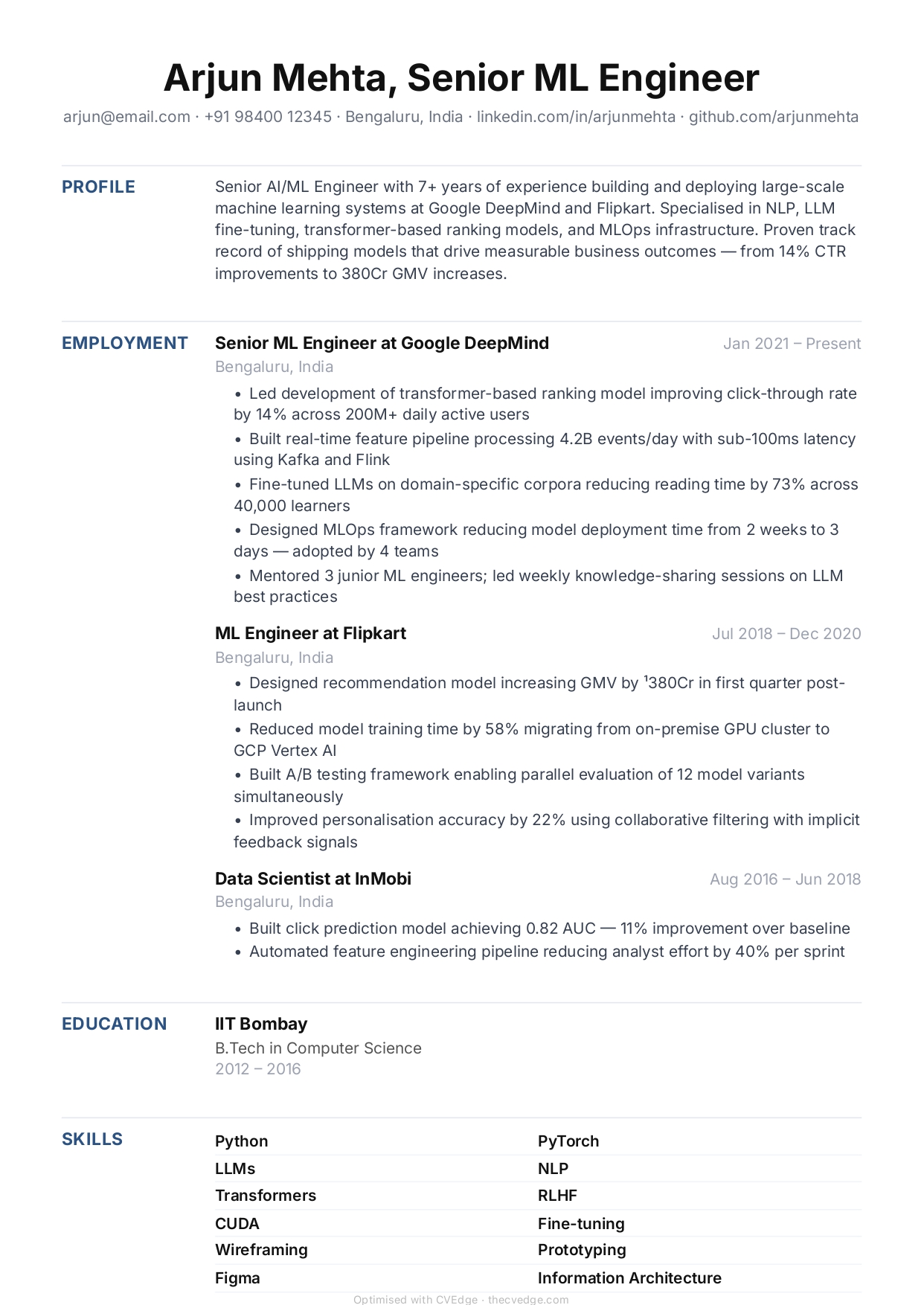
Ledger Resume Template: Handles long project and role histories without becoming dense. Good for three-page technical CVs.
Related Guides
Next Step
Build the Lebenslauf on a single-column structure, then confirm it parses with our free ATS Resume Checker.