Australian Resume Format
Australian resume convention is genuinely distinct, and candidates arriving from the US, India or continental Europe consistently get three things wrong: length, photographs, and selection criteria.
Check your current document with our free ATS Resume Checker, then work through the differences below.
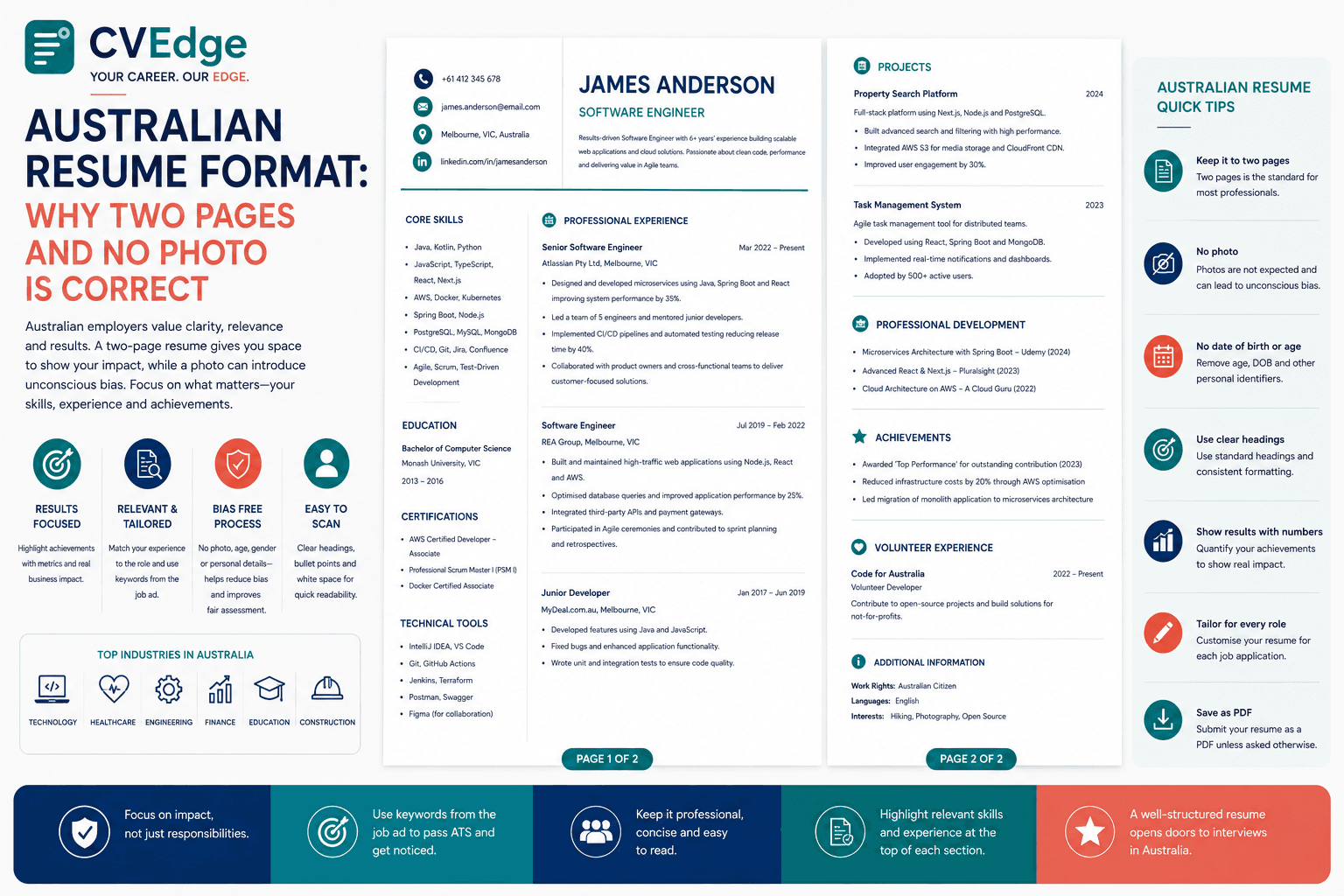
Length: Two to Four Pages, Not One
The American one-page rule does not apply in Australia and applying it will hurt you.
Two to three pages is standard for a professional with experience. Four is acceptable in academia, government and senior technical roles. A one-page resume from a candidate with ten years' experience reads as though the detail is missing, not as though it has been disciplined.
Use the space for substance: what the role involved, what you were accountable for, what changed. Do not use it for a skills word-cloud or an expanded objective statement.
No Photograph, No Personal Details
Australia has strong anti-discrimination norms in recruitment, and the convention is firmly against personal identifiers on a resume.
Omit: photograph, date of birth, age, marital status, nationality, religion, gender, and a full residential address. A suburb and state is sufficient for location ("Carlton, VIC"), and even that is optional.
Include your work rights. This is the exception, and Australian employers do want it. State it in one line: Australian citizen, permanent resident, or the visa subclass you hold and its validity. If you require sponsorship, saying so honestly is better than leaving the question open; many employers filter on it either way.
Selection Criteria
This is the biggest structural difference, and it catches almost every overseas applicant.
Australian public sector roles, universities, and many not-for-profit and healthcare employers publish key selection criteria: a numbered list of capabilities the applicant must address individually, usually in a separate document alongside the resume.
If a posting lists selection criteria, addressing them is not optional. Applications that ignore them are typically rejected at the first pass regardless of the resume's quality.
Address each criterion under its own heading, in the order given, with a concrete example. The standard approach is the STAR structure: the situation, the task you faced, the action you took, and the result. Keep each to roughly a quarter to half a page.
Private sector roles usually do not use formal selection criteria, but the underlying expectation (evidence-based claims with examples) carries across.
Referees
Australian practice differs from the US "references available on request" convention.
Listing two referees with name, role, organisation and contact details is normal and expected, particularly in the public sector. Always ask permission first. If you would rather not list them while employed, "Referees available on request" is accepted, but expect to provide them early in the process rather than at offer stage.
Language and Tone
Australian professional writing is direct and understated. Inflated self-description reads badly here.
- Use Australian spelling: organisation, specialised, centre, programme where appropriate, analyse.
- Avoid heavy superlatives. "Delivered the migration six weeks early" beats "spearheaded a transformational programme".
- Translate overseas context. An unfamiliar employer name means nothing to an Australian recruiter. Add a five-word descriptor: "Zomato (food delivery platform, 40M+ users)".
Structure
- Name and contact details, with suburb and state, and work rights
- Professional summary, three or four lines
- Key skills, a short scannable block
- Professional experience, reverse chronological, with achievements
- Education and qualifications
- Professional memberships, licences and tickets where relevant
- Referees
For trades and construction, licences and tickets (White Card, high risk work licences, trade certificates) belong high on page one with their numbers and expiry dates.
The ATS Layer
Australian employers, particularly government departments, large corporates and recruitment agencies, use applicant tracking systems widely. SEEK-integrated systems, PageUp, Workday and Taleo are all common.
Single column, standard headings, no tables, PDF unless .docx is requested: some Australian agencies do specifically request Word format so they can add their own cover sheet. Read the posting.
Common Mistakes
- One-page US resume that reads as thin
- Photograph included
- Date of birth or full address printed
- Selection criteria ignored on a public sector application
- US spelling throughout
- Overseas employers named without context
- Work rights not stated
Templates That Parse Cleanly
Every layout below is single-column and free to use. Preview and edit any of them in the CVEdge resume builder, or browse all 32 in the template library.
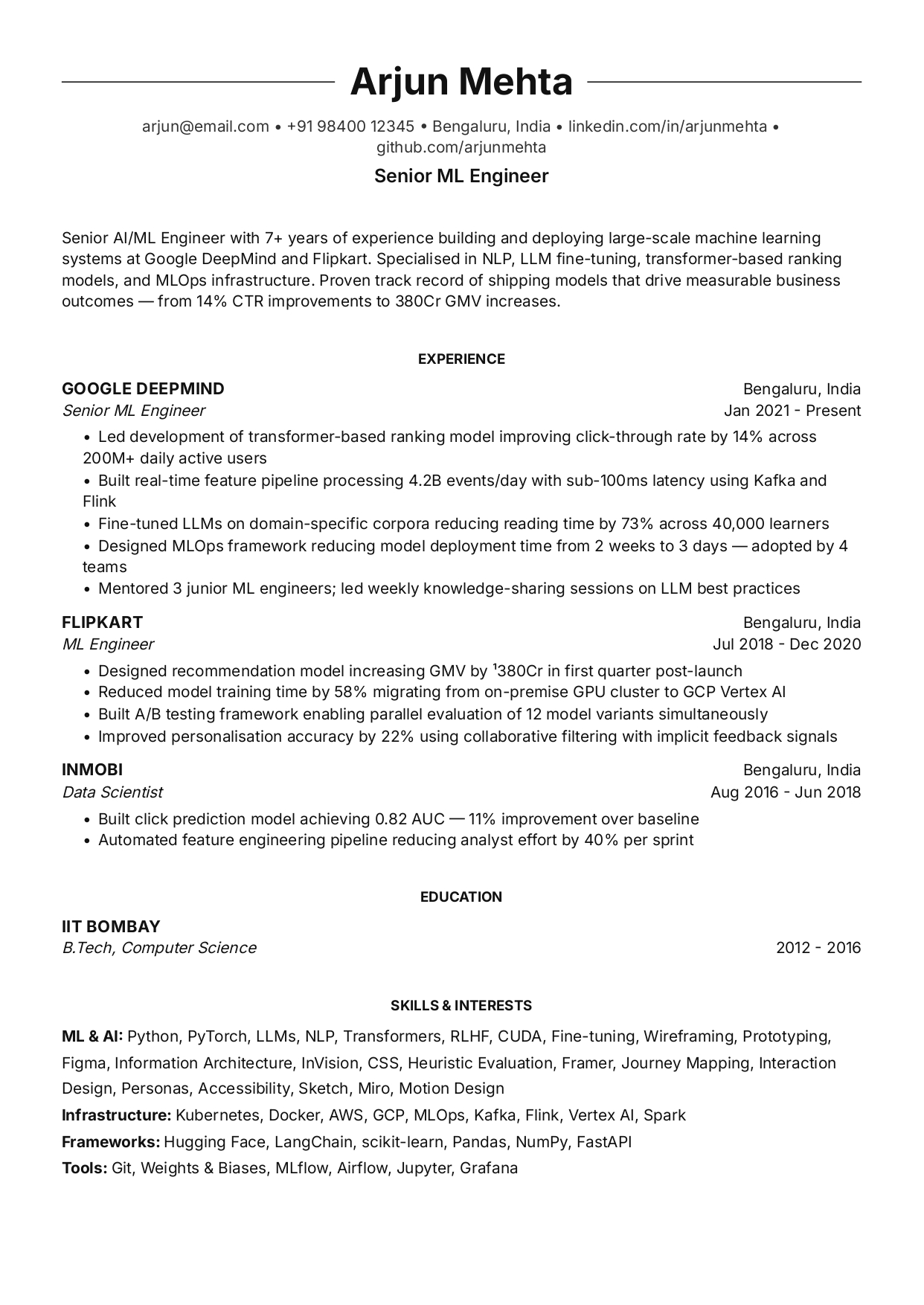
Harvard ATS Resume Template: Single-column, academic-standard layout. The most-viewed template on CVEdge and the safest choice when you do not know which ATS you are up against.
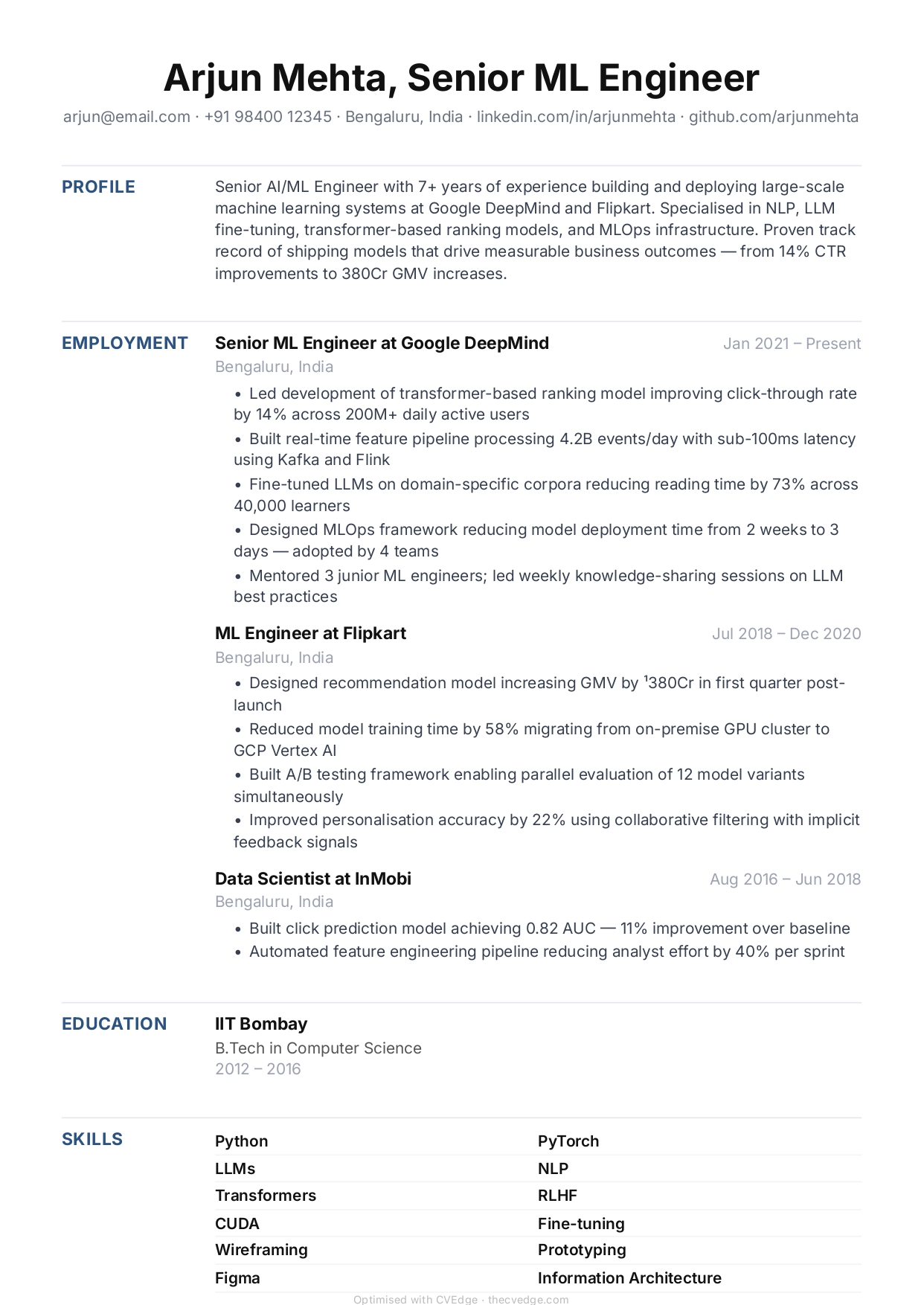
Ledger Resume Template: Handles long project and role histories without becoming dense. Good for three-page technical CVs.
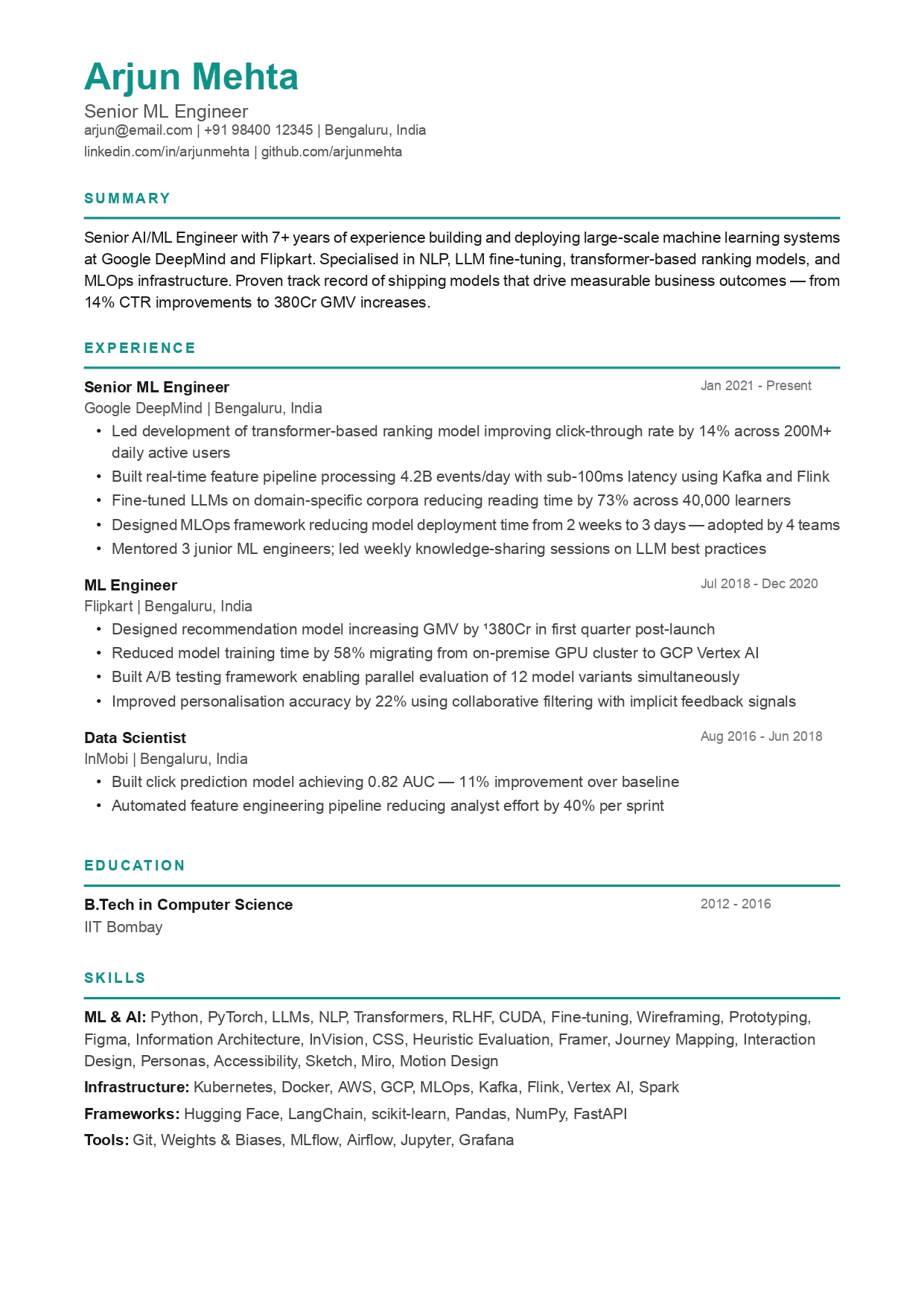
Classic ATS Resume Template: Standard headings, no graphics, parses cleanly through Greenhouse, Workday, Lever and iCIMS. The default if you are unsure.
Related Guides
Frequently asked questions
How long should an Australian resume be?
Two to three pages for experienced professionals, up to four in academia, government and senior technical roles. A one-page resume reads as missing detail in Australia.
Should an Australian resume include a photo?
No. Australian anti-discrimination practice means most employers prefer no photo, date of birth or marital status. Name, location, phone, email and LinkedIn are enough.
Do I need to address selection criteria?
For government and many large-organisation roles, yes, in a separate document that answers each criterion with an example. For private-sector roles it is rarely required.
Should I list referees on an Australian resume?
Yes, or state "Referees available on request" if you prefer to warn them first. Two referees, usually recent managers, is the norm.
Next Step
Check the parse with our free ATS Resume Checker.