
A CV that works in London or San Francisco is not quite the right document for Dubai or Abu Dhabi. The differences are not cosmetic. They come from a labour market where the great majority of the workforce is expatriate, where hiring is tied to visa sponsorship, and where a recruiter's first practical question is often not about your skills at all but about how quickly and cheaply you can start.
This is what changes, and why.
The structural difference: sponsorship drives screening
In most Western markets, work authorisation is a background check late in the process. In the UAE, employment and residency are directly linked (your employer sponsors your residence visa), so your current status has an immediate cost implication for the hiring company.
This single fact explains most of the convention differences below. A recruiter sorting a hundred applications is filtering on availability and transfer cost as much as on capability, and a CV that leaves those questions unanswered gets set aside in favour of one that answers them.
Personal details: what to include
Gulf CVs conventionally carry personal information that a US CV would deliberately omit. Include:
- Nationality. Standard and expected. It is relevant to visa processing and quota considerations.
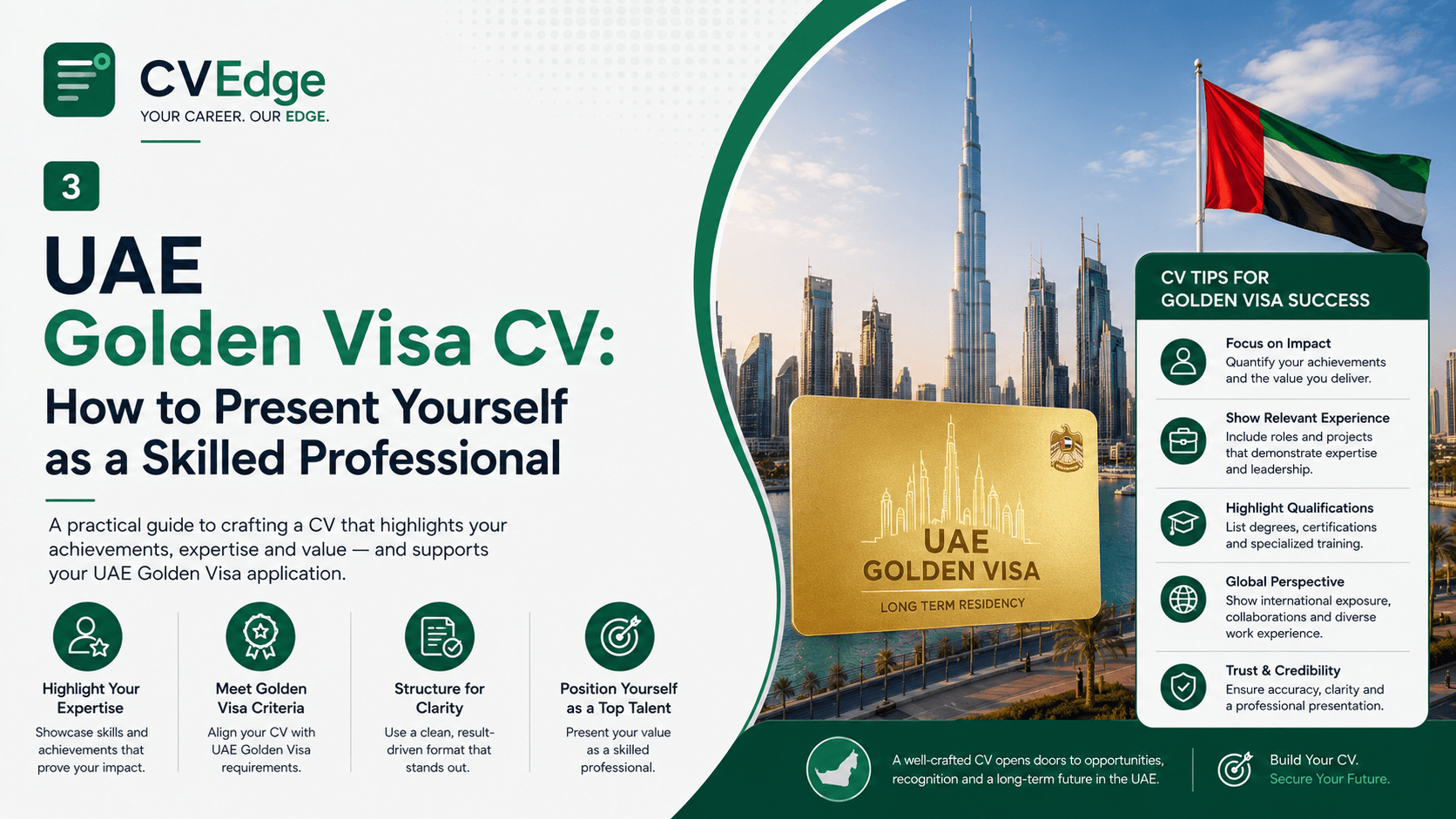
- Current visa status. The most useful line you can add. State it plainly: "Employment visa (transferable)", "Visit visa", "Golden Visa", "Spouse-sponsored, no sponsorship required", or "Requires sponsorship". A candidate who needs no new sponsorship is materially cheaper and faster to hire, and if that is you, say so where it will be seen.
- Current location. "Dubai, UAE" tells a recruiter you are available for an in-person interview this week. If you are applying from abroad, say so and state your notice period and availability.
- Notice period. Include it. "Available immediately" or "30 days' notice" is a genuine differentiator in a market that hires quickly.
- Languages, with honest proficiency levels. Arabic is a real advantage for client-facing, government-adjacent and public-sector-linked roles. If you have it, list the level accurately: "conversational" and "business fluent" are different claims and both get tested.
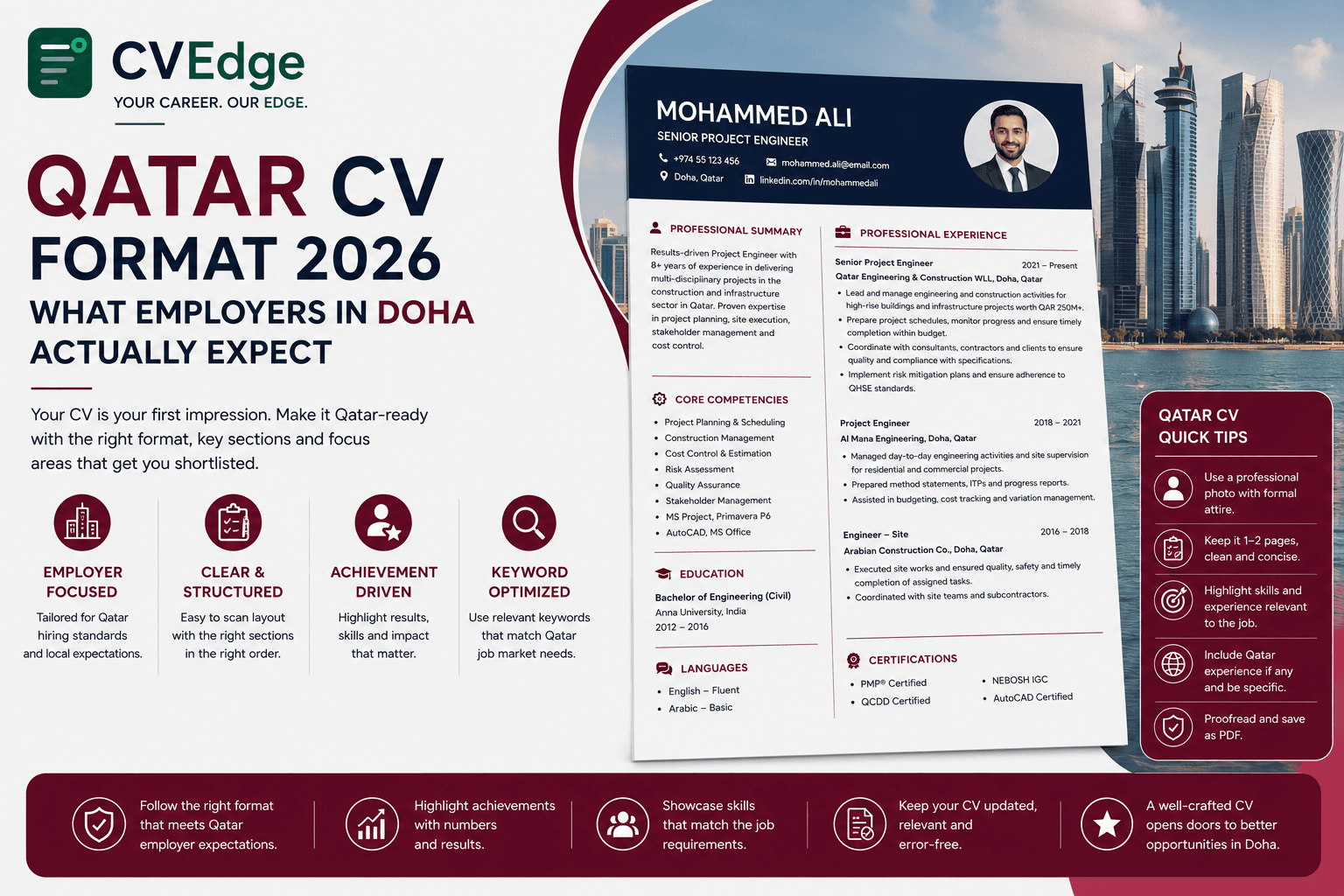
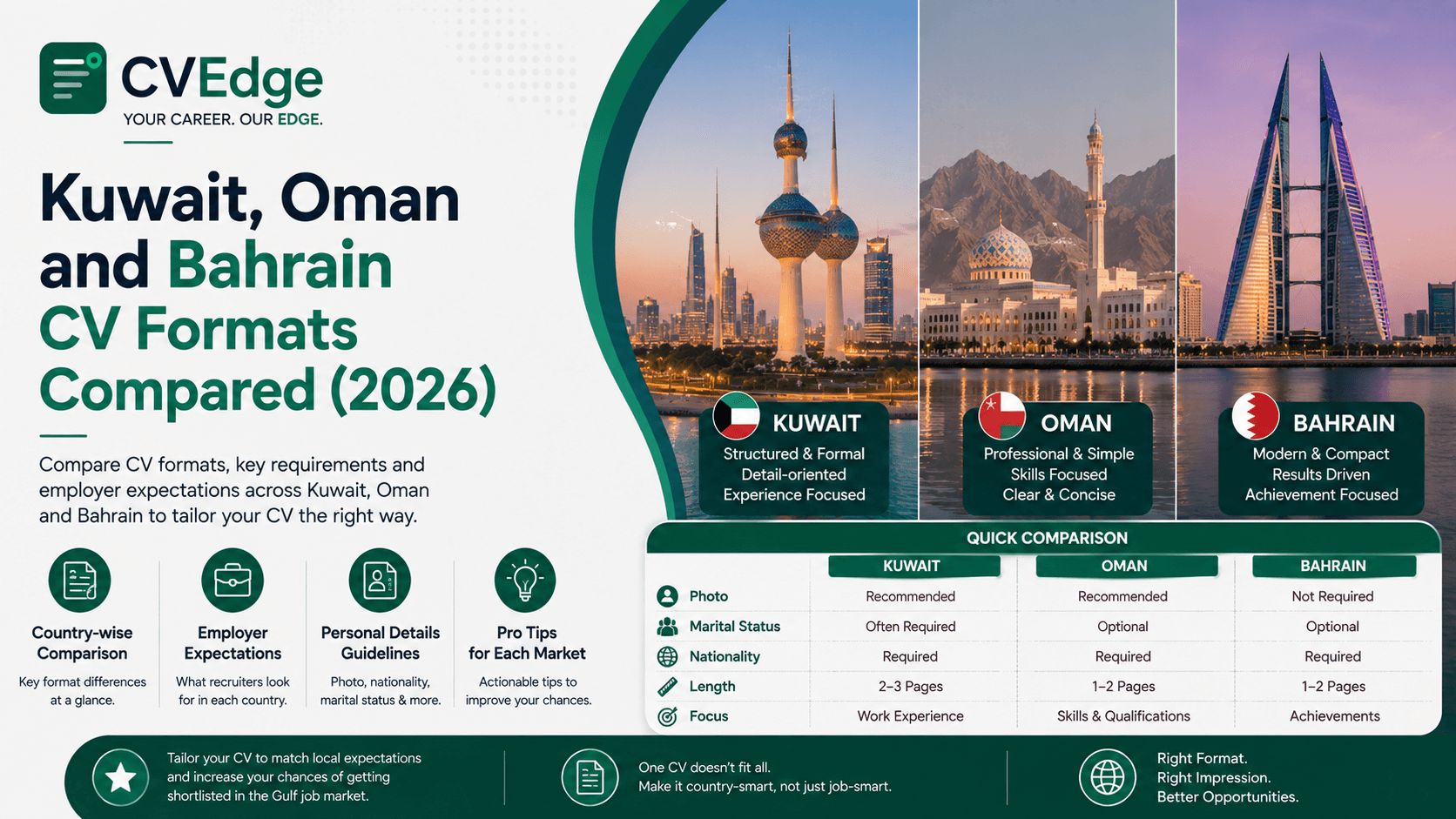
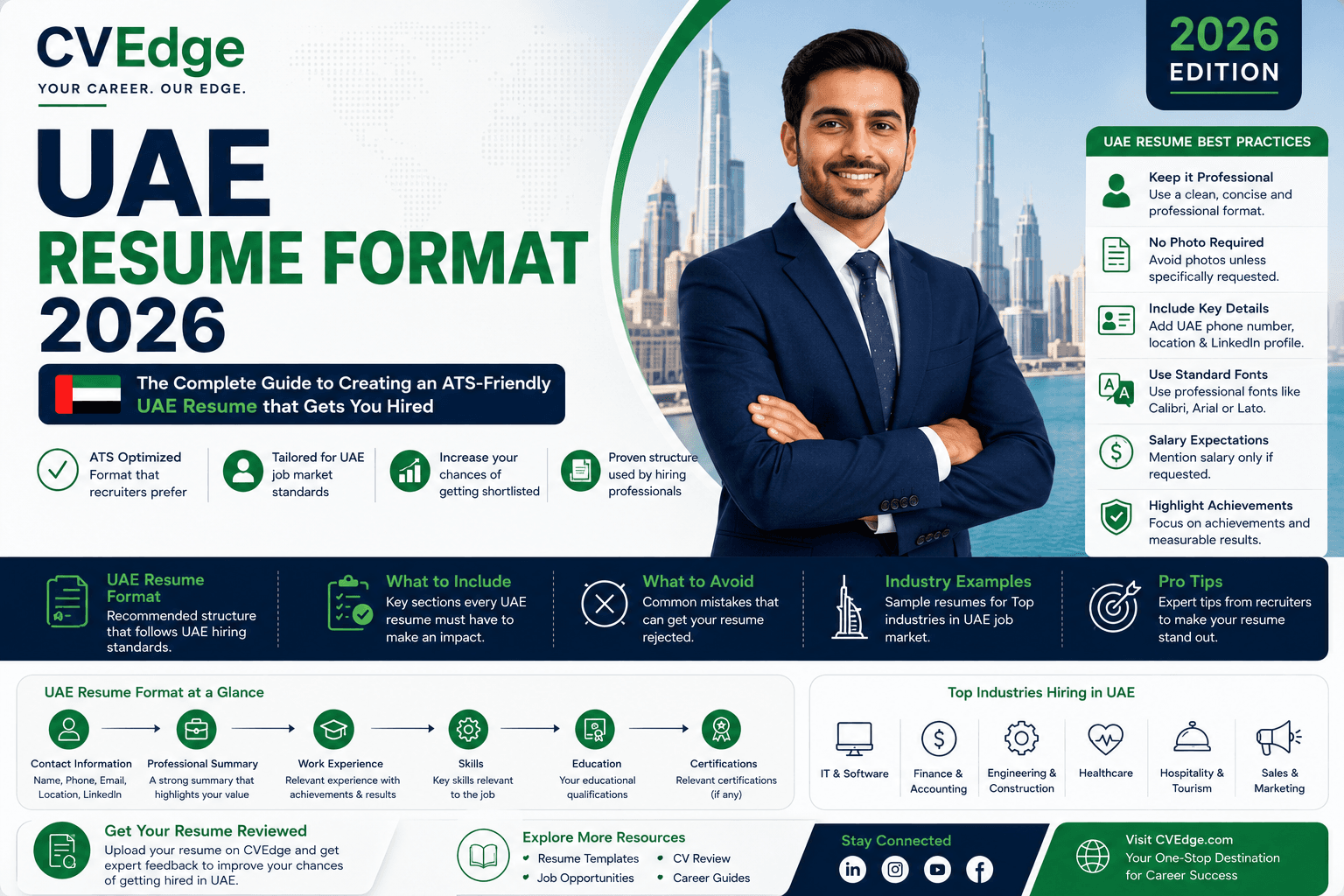
On photographs: a professional headshot is conventional and widely expected in the region. It is not mandatory and its absence will not disqualify you, but its presence is unremarkable here in a way it would not be in the US or UK. If you include one, make it a plain professional headshot.
Some older Gulf CV templates also ask for date of birth, marital status, religion and passport number. These conventions are fading, and there is no need to volunteer them. Date of birth and marital status still appear commonly enough to be unremarkable if you include them; passport numbers should never be on a document you email widely, for straightforward security reasons.
What to leave out
The UAE market runs on international norms for the actual professional content. Skip the padding: an objective statement that says you are seeking a challenging role, a full list of every school you attended, references and their contact details, and any personal detail that is not one of the practical ones above.
Structure that works
- Header: name, phone with UAE or international country code, email, location, LinkedIn. In the body of the page, never in a document header, which many parsers do not read.
- Status line: nationality, visa status, notice period. One line, immediately visible.
- Professional summary: two or three lines stating your specialisation, years of experience, and regional experience if you have it. "Eight years in FMCG supply chain, five of them across GCC markets" does more work than any adjective.
- Experience: reverse chronological, with outcomes rather than duties, and regional context named where relevant.
- Education and certifications: including attestation status if your degree is already attested, which saves the employer a step.
- Skills and languages.
Regional experience is a differentiator — name it
If you have worked in the GCC before, make that explicit rather than leaving it to be inferred from an employer name a recruiter may not recognise. Name the markets: "Managed distributor relationships across UAE, Oman and Bahrain." Employers value regional familiarity because business norms, regulatory environments and client expectations differ enough that it genuinely shortens ramp-up.
If you have not worked in the region, do not manufacture it. Emphasise transferable scale and any multicultural or multi-market experience you do have.
Degree attestation
Employment offers in the UAE typically require your educational certificates to be attested through the relevant authorities in your home country and by UAE authorities. It is a process that takes real time. If yours is already done, one line ("Bachelor of Engineering, attested") is a small, concrete advantage. If it is not, start it early; it becomes the bottleneck between offer and start date more often than anything else.
Requirements change, so verify the current process with the relevant UAE authority rather than relying on any article, including this one.
Formatting still has to parse
Large UAE employers and the regional job portals run applicant tracking systems like everyone else. The Gulf conventions above change what information you include; they do not change the mechanics. Single-column layout, standard section headings, real text rather than images, contact details in the body, and consistent month-and-year dates.
The quickest check: open your PDF, select all, copy, paste into a plain text editor. If it reads correctly in order and contains your phone number, it will parse.
One document per market
If you are applying to both Gulf and Western roles, keep two versions. The UAE version carries nationality, visa status and notice period, and possibly a photo. The US or UK version carries none of them: in those markets the same details are at best noise and at worst a legal complication for the employer. Maintaining both takes minutes and prevents sending the wrong one.
For a deeper regional read, see our Saudi Arabia CV guide, which covers the Saudization considerations specific to KSA, or check your current CV against ATS parsing with the free checker.
Frequently asked questions
Should a UAE resume include a photo and personal details?
A photo, nationality, visa status and location are still commonly expected by UAE recruiters. Date of birth and marital status are declining and can be left out. Keep the photo small and in the header so the layout still parses.
What is the ideal length of a CV for Dubai?
Two pages. One page reads as thin to Gulf recruiters, three or more gets skimmed. Put a status line (nationality, visa status, location, notice period) directly under your name.
Do I need to mention my visa status on a UAE CV?
Yes. Employment and residency are linked in the UAE, so "Employment visa, transferable" or "Visit visa, available immediately" answers the recruiter's first practical question and stops your CV being set aside.
Is degree attestation required to work in the UAE?
For most professional roles the employer will need your degree attested for the work permit. Starting attestation early and noting "Degree attested (MOFA)" on the CV removes a delay that can cost you an offer.