
Personal Details on a Gulf CV
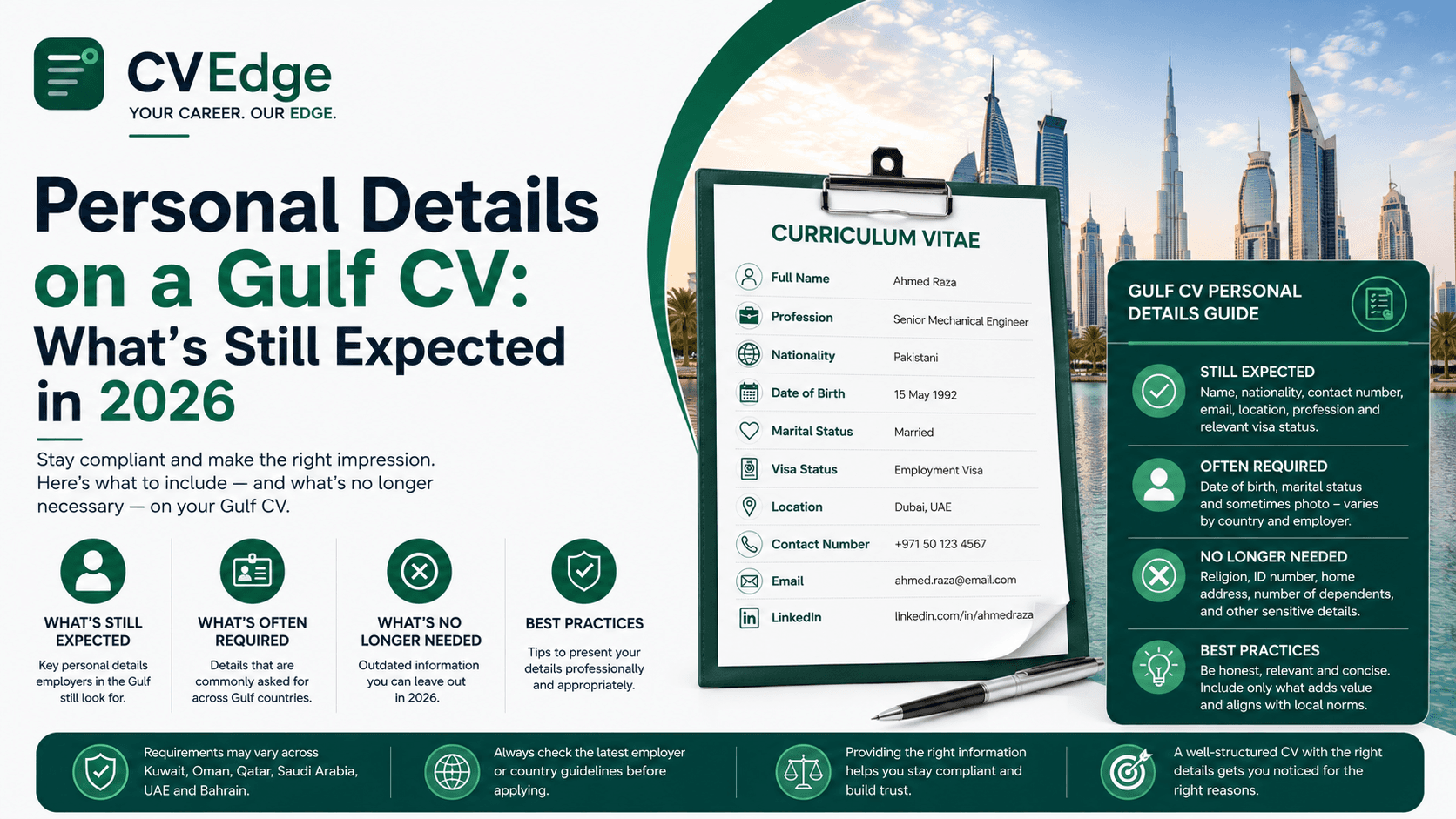
Search for a Gulf CV template and you will find fields that vanished from Western resumes twenty years ago: photograph, date of birth, marital status, religion, father's name. Candidates fill them in because the template asks, then wonder why the CV parses badly.
The honest position in 2026 is that the Gulf is mid-transition. Some of these fields still carry real information for a Gulf recruiter. Others are dead weight inherited from an older convention. A few now actively damage your application, mostly for technical reasons rather than cultural ones.
Here is the field-by-field position. Check the result with our free ATS Resume Checker.
Include: Nationality
This is the one Western-template advice gets wrong for the Gulf.
Nationality is genuinely load-bearing information in Gulf hiring. Localisation policy across Saudi Arabia, Kuwait, Oman, Bahrain, Qatar and the UAE means employers are managing workforce composition, and some recruiters filter candidate databases on this field. Leaving it blank does not make you neutral. It makes you invisible in a filtered search.
State it plainly in your header. One word.
Include: Visa or Residence Status
The most useful line an in-region candidate can add, and one most candidates leave out.
If you hold a transferable residence permit, a valid iqama, or you can obtain a No Objection Certificate from a current employer, say so. Each of these removes weeks of friction from a hire. Recruiters look for it, and its absence is often read as "complicated".
If you are applying from outside the region, state your availability and notice period instead.
Include: Current Location
City and country. Gulf hiring frequently distinguishes between in-country candidates and overseas applicants, because mobilisation cost and timeline differ substantially.
Optional and Increasingly Neutral: Photograph
Once effectively mandatory across the Gulf. Now genuinely optional at most large employers, and a technical problem regardless of the cultural position.
The issue is not the photo itself. It is that adding one pushes you toward a layout (a sidebar, a header block, a two-column grid) that parsers handle badly. Reading order scrambles, contact details get attached to the wrong section, and sometimes the parser returns nothing usable at all.
If an employer's application form has a photo upload field, use it. Do not embed a photo in the document that gets parsed. If you are set on including one, place it top-right in a single-column layout and keep every piece of text outside the image.
Our guide to ATS resume format covers why layout drives parsing outcomes.
Optional, Trending Toward Omission: Date of Birth
Still present on many locally-written Gulf CVs. No longer expected by most multinational and large regional employers, and not required at application stage.
There is no strong argument for including it and a mild one against, in that it invites age-based filtering you cannot see. Omit it. If a visa application later requires it, that is a separate document.
Omit: Marital Status, Dependants, Religion, Father's Name
These persist in circulating templates and in some public-sector application forms. On a CV sent to a private-sector employer they serve no screening purpose, and they consume space on the most valuable part of page one.
The one narrow exception is where an employer's own form explicitly asks: some government entities and some family-owned businesses still do. Answer the form. Do not volunteer it on the CV.
Religion in particular should not appear on a professional CV in any market.
Omit: Passport and ID Numbers
Never put a passport number, national ID number or iqama number on a CV you distribute. You are sending this document to agencies, job boards and unknown recipients, and these numbers are directly usable for identity fraud.
State the status ("transferable iqama", "valid UAE residence visa"), not the number. The number belongs in a verified application portal, after an offer.
What This Leaves You
A Gulf CV header in 2026 should read approximately:
Full Name (as per passport) Job Title or Specialism +XXX XX XXX XXXX · name@email.com · linkedin.com/in/yourname Dubai, UAE · Indian national · Transferable residence visa
Four lines. Everything that helps a recruiter make a decision, nothing that invites bias or exposes you, and a layout a parser can read.
Quick Reference
| Field | Position |
|---|---|
| Nationality | Include |
| Visa / residence status | Include |
| Current city and country | Include |
| Photograph | Optional; hurts parsing |
| Date of birth | Omit |
| Marital status | Omit |
| Religion | Omit |
| Father's name | Omit |
| Passport / ID number | Never |
Templates That Parse Cleanly
Every layout below is single-column and free to use. Preview and edit any of them in the CVEdge resume builder, or browse all 32 in the template library.
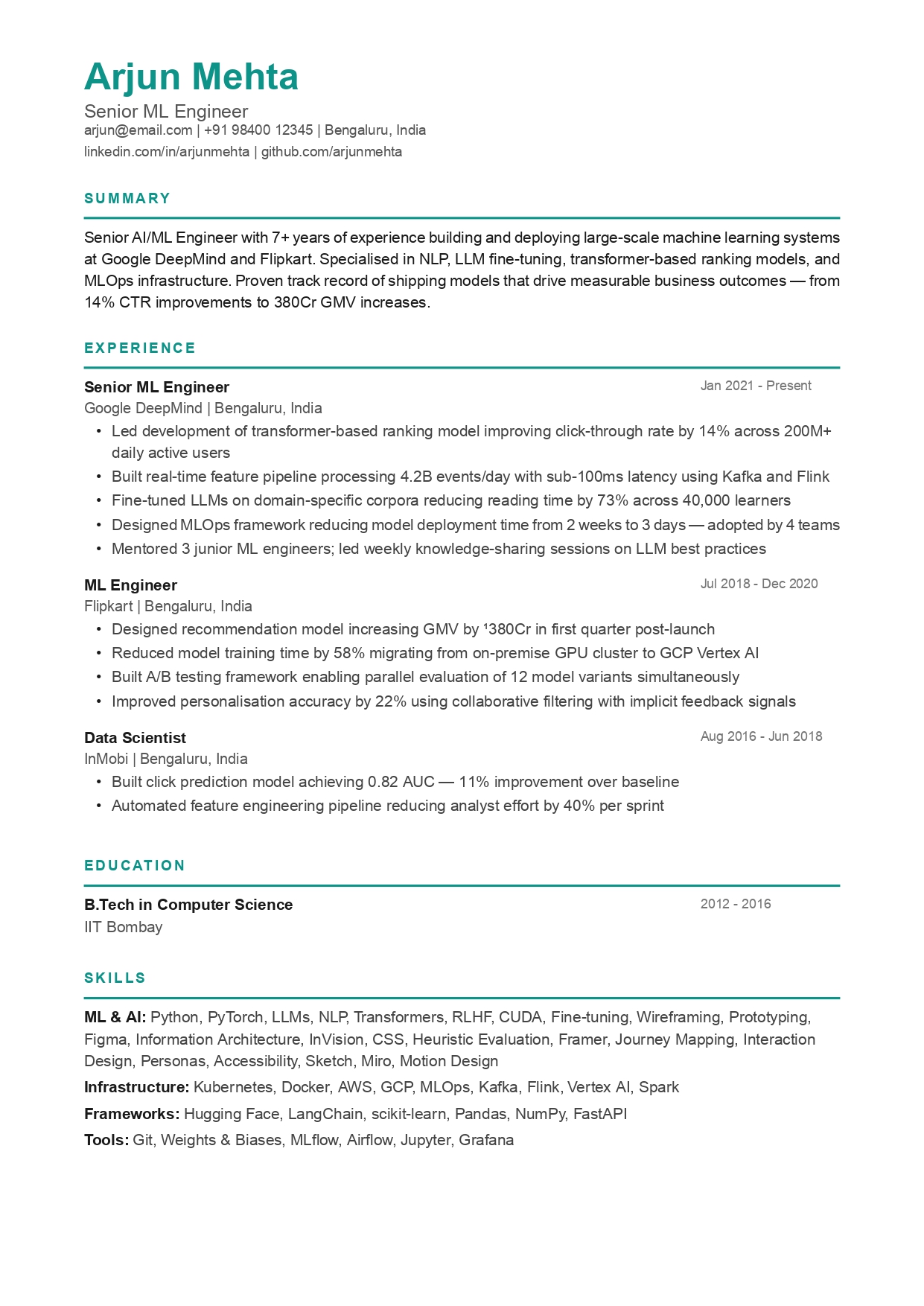
Classic ATS Resume Template: Standard headings, no graphics, parses cleanly through Greenhouse, Workday, Lever and iCIMS. The default if you are unsure.
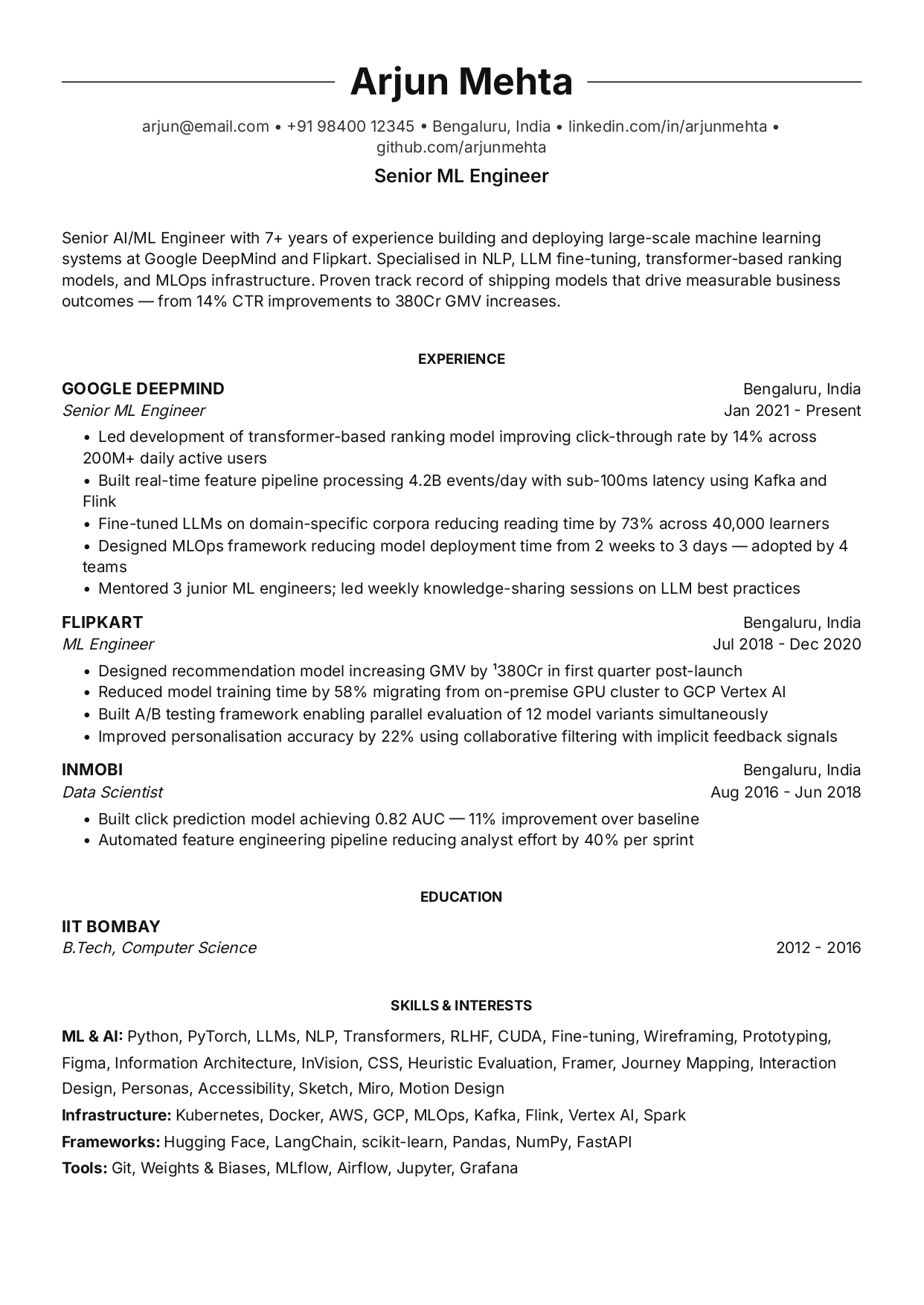
Harvard ATS Resume Template: Single-column, academic-standard layout. The most-viewed template on CVEdge and the safest choice when you do not know which ATS you are up against.
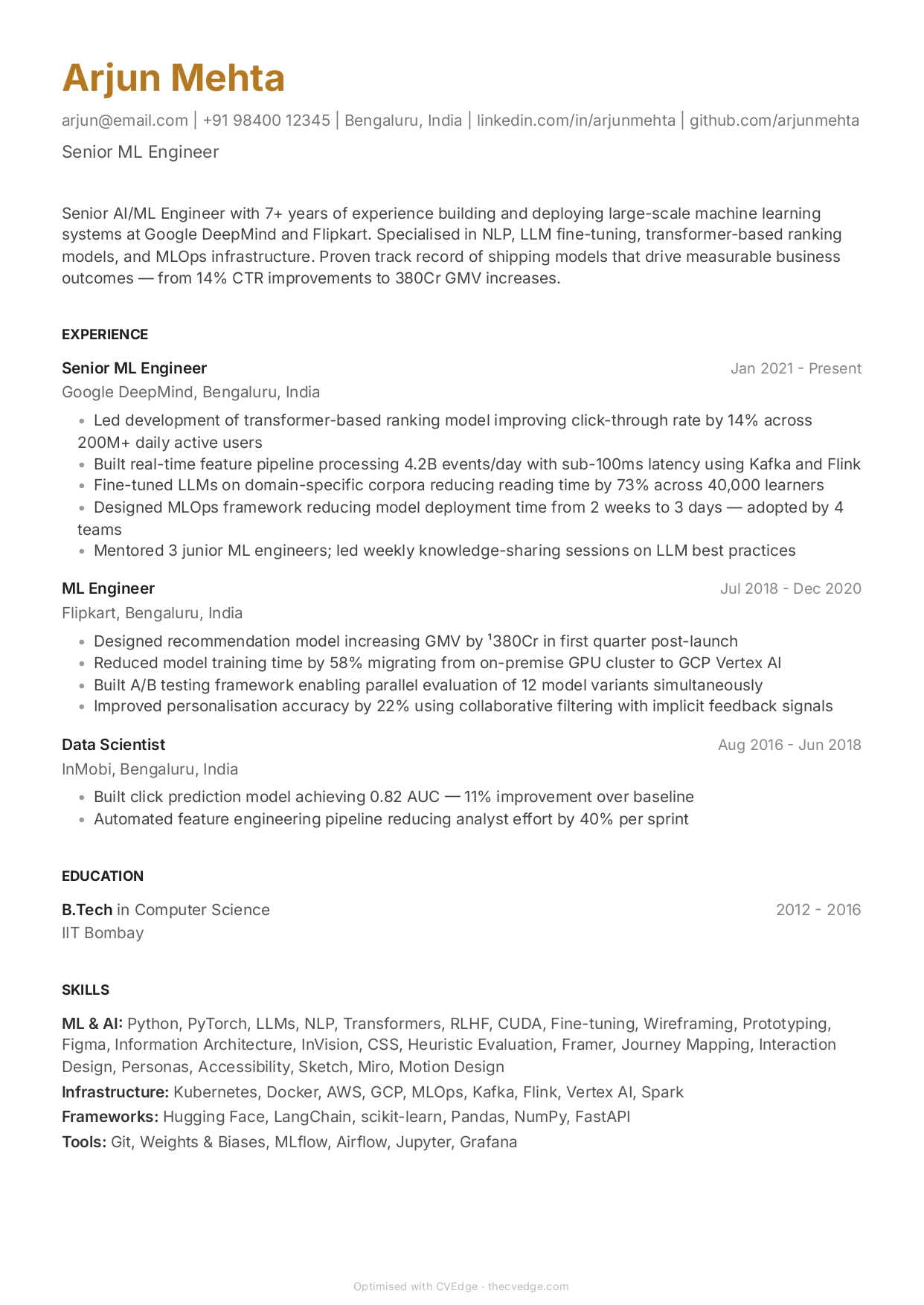
Minimal ATS Resume Template: Maximum content in minimum space, useful when you need to hold a two-page limit without cutting substance.
Related Guides
Next Step
Rebuild the header, then confirm a parser reads it correctly with our free ATS Resume Checker. Single-column layouts that handle Gulf headers cleanly are in our resume templates.