

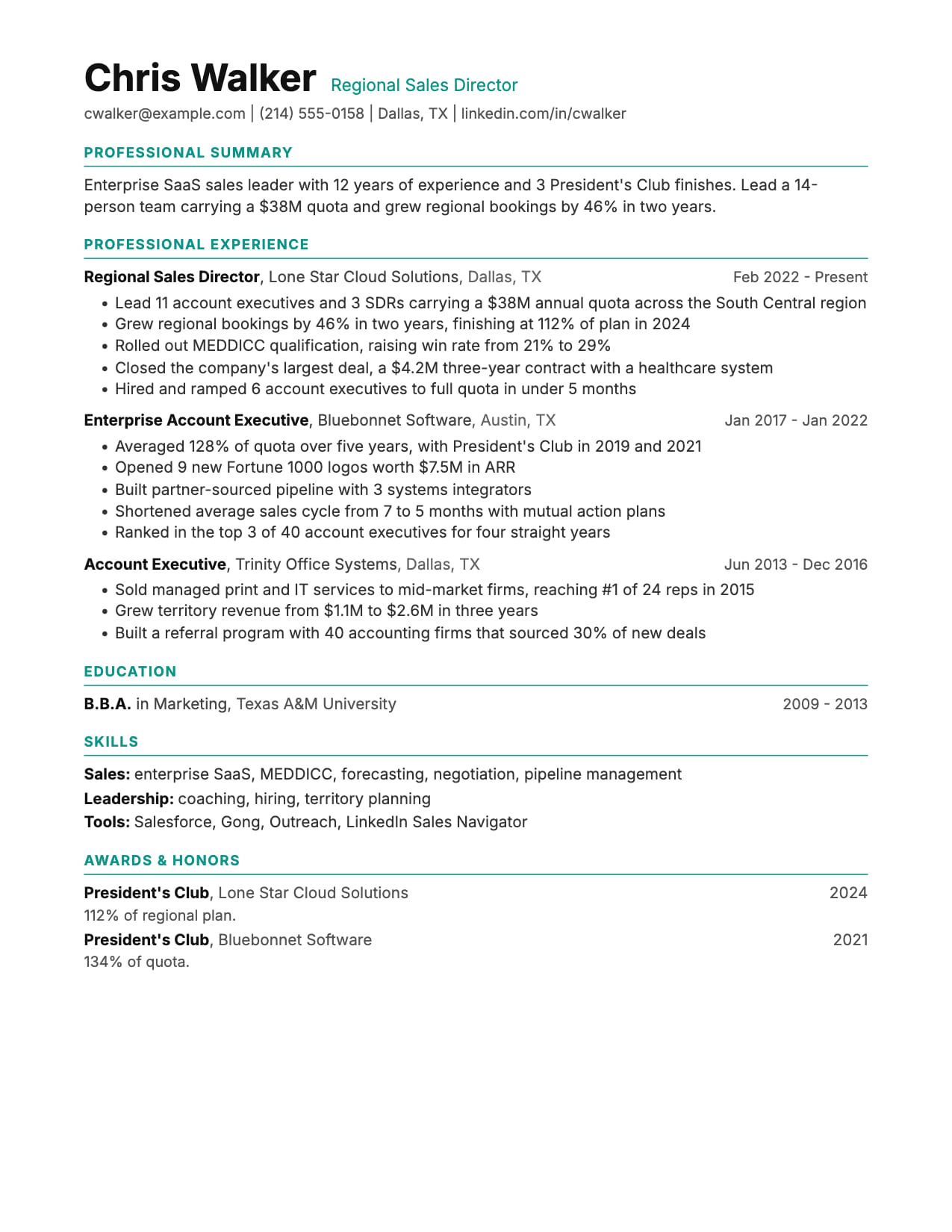
Executive ATS Resume Template
Senior-level polish with full ATS compliance. No trade-off at leadership level.
No credit card · No watermarks · Switch templates any time
About this template
Senior professionals sometimes worry that using a polished template means sacrificing ATS safety. Executive disproves this: premium spacing, refined hierarchy, and a layout that communicates seniority, all built on a single-column, ATS-safe foundation.
For director-level and above professionals applying via enterprise portals, Executive gives you the best of both worlds. The visual quality signals seniority to human reviewers. The single-column ATS-safe structure ensures the automated screening doesn't misparse your 20-year career.
Executive scores 93–96 on CVEdge's ATS analyzer. The premium spacing and typography choices don't use any non-parsable elements. They're CSS properties, not images or tables.
For senior hires, most companies combine ATS screening with human review within the first few days. Executive is optimized for both stages of that process.
Who is this template for?
- Senior professionals (10+ years) applying via enterprise portals
- VP and director-level applicants who won't compromise on polish
- Senior leaders at large corporations and regulated industries
- C-suite professionals maintaining ATS compatibility
Start with this template for free
Upload your existing resume or start from scratch. CVEdge pre-fills your content into the template and gives you an instant ATS score.
Why this template works for ats friendly
Executive gives more weight to the name and section headings and more separation between roles, which helps when you are compressing fifteen or more years into two pages. It remains single-column and parses cleanly. Choose it when your challenge is hierarchy across many roles rather than filling a page.
Recommended section order
- 1Contact
- 2Executive summary
- 3Experience
- 4Board & advisory
- 5Education
- 6Certifications
At senior level the summary carries more load. It frames scope (budget, headcount, remit) before the reader reaches any individual role. Board and advisory positions deserve their own section rather than being mixed into Experience, where they read as jobs.
What to put where
Executive summary
Four or five sentences establishing scope: the size of the organization, the size of your remit, and the outcome you are known for. This is the only place a reader learns your altitude before the detail.
Experience
For each senior role, add a one-line scope statement (team size, budget, P&L) before the bullets. Without it, a director's bullets can read like a manager's.
Board & advisory
Separate section, listed with organization and dates. Mixing these into employment history confuses the timeline.
Education
Brief, at the end. At this level nobody is reading your degree classification. The exception is an MBA or a qualification that counts as a credential in your field.
Common mistakes with this template
- Listing every role from a thirty-year career at equal detail. Give the last ten to fifteen years the space, and compress earlier roles to a line each under an 'Earlier career' heading.
- Omitting scope, which is the single most common weakness in senior resumes. Bullets without team size, budget or remit cannot be leveled.
- Writing in the abstract language of strategy with no concrete outcome attached.
- Going to three pages when two would do. Length at senior level reads as an inability to prioritize.
When to choose something else
Candidates with under about eight years of experience will usually be better served by the Classic layout.
Questions about this template
Do senior executives need to worry about ATS?+
Yes. Even at VP and C-suite level, most large companies route applications through ATS. Executive solves this by delivering premium polish without sacrificing single-column ATS safety.
What's the ATS score for the Executive template on CVEdge?+
Executive scores 93–96 on CVEdge's ATS analyzer for well-written content. The slightly lower ceiling versus Classic reflects Executive's additional styling, which is irrelevant in real-world screening performance.
How long should an executive resume be?+
Two pages for most senior roles, occasionally three where an extensive board, publication or patent record warrants it. Page count is less a rule than a test of editorial judgment: the reader is checking whether you can tell what matters. Give the last ten to fifteen years real detail and compress everything earlier into a short 'Earlier career' block.
Do executives still get screened by ATS?+
Below C-suite, frequently yes. Director and VP applications through corporate portals go through the same parsing and search as any other. At true C-suite level more hiring runs through search firms, where a human reads first. Since most senior candidates apply through both routes, a format that parses cleanly costs nothing and removes a risk.
Template features
- Premium visual quality with 93–96 ATS compliance score
- Single column, no parsing compromises
- Summary section positioned for narrative leadership
- Refined spacing ensures no dense-text parsing issues
- Verified through Greenhouse, Workday, and iCIMS
More ats friendly templates
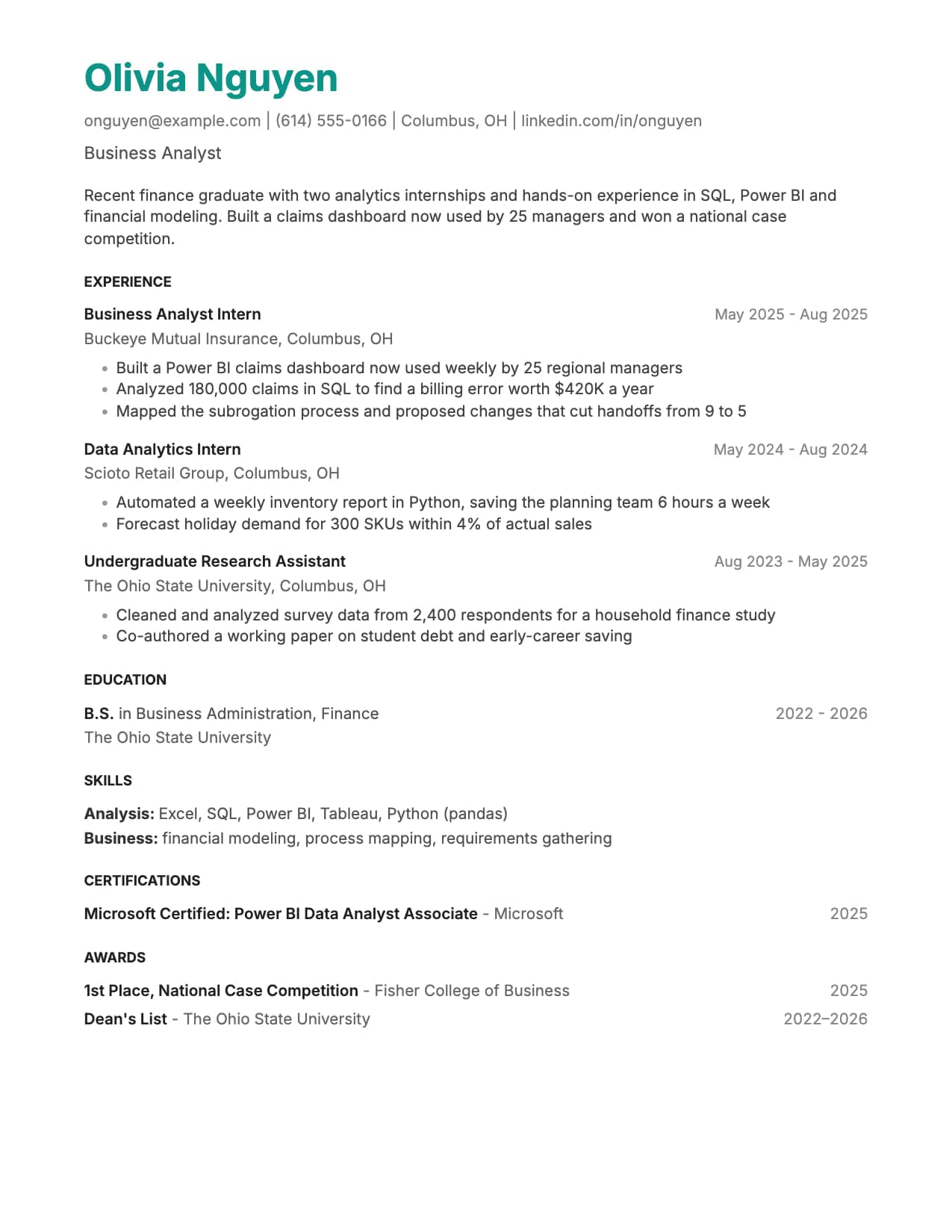
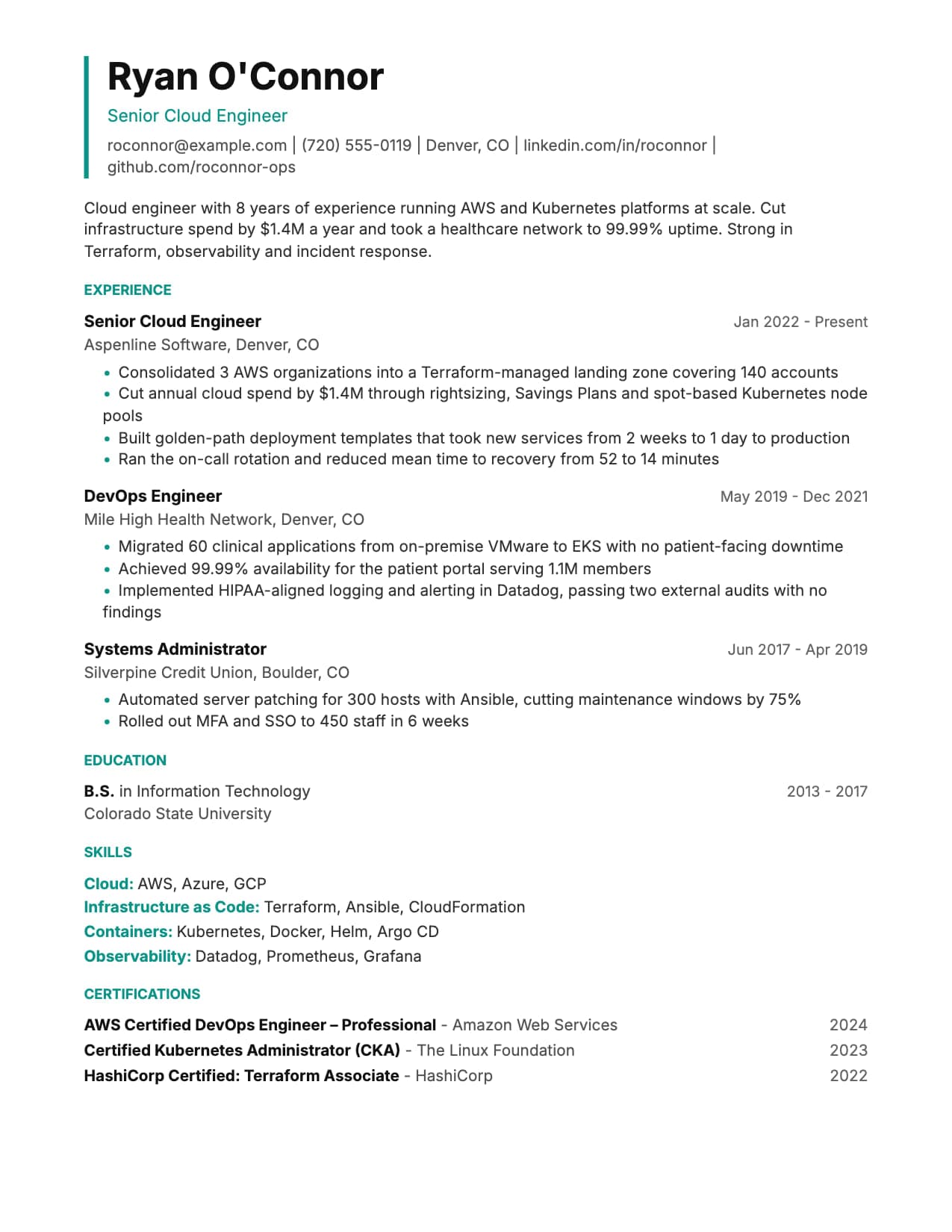
View all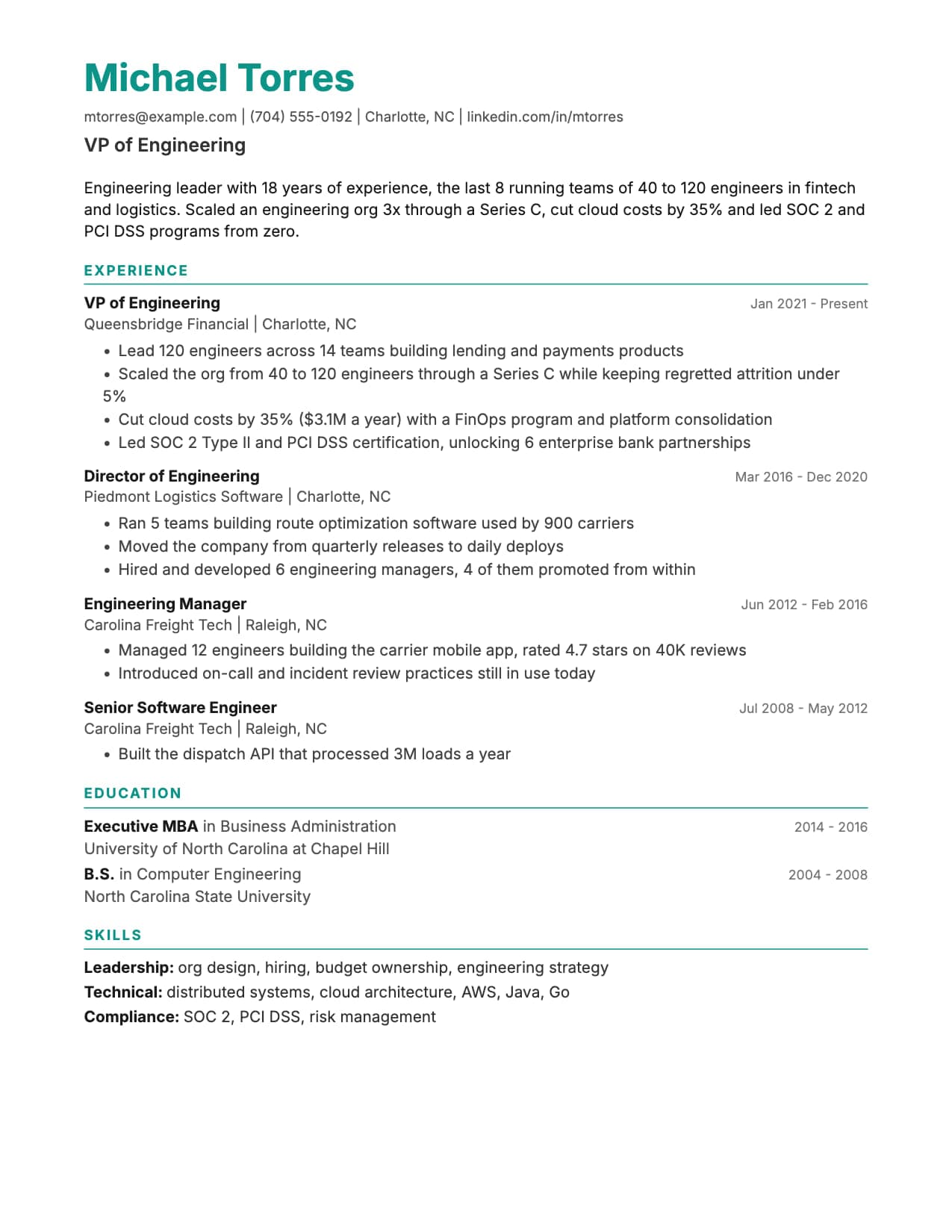
Build your resume with Executive for free
Upload your existing resume or start fresh. ATS score included. No credit card required.