

Resume Summary Examples for 2026
The summary sits at the top of the resume, under the contact block, and it is the first sentence a recruiter reads. It is also where most resumes go wrong, because people write it as a personality description ("dynamic, results-driven professional") rather than as a statement of what they are and what they have done. A good summary is three lines, contains a number, and could not be pasted onto anyone else's resume.
This guide gives the formula and fifteen examples across common US roles. Each example is deliberately specific; replace the details with yours, not the shape.
The Three-Line Formula
- Who you are: title, years, domain or industry.
- What you are known for: the one or two capabilities the target role cares about most.
- Proof: a headline result with a number.
Optionally, a fourth fragment stating what you are looking for, only if it narrows usefully ("seeking a staff engineer role in payments").
What to Leave Out
- Adjectives about yourself: dynamic, passionate, motivated, results-driven, detail-oriented.
- "Seeking a challenging position": that is an objective, and objectives are dated.
- Anything that repeats your job title without adding scope or a result.
- First person. No "I".
Fifteen Examples
Software engineer
Senior software engineer with 8 years building payments and ledger systems in Go and Java. Known for reliability work: led the migration that cut p99 checkout latency 62% and took on-call pages from 40 to 6 a month.
Product manager
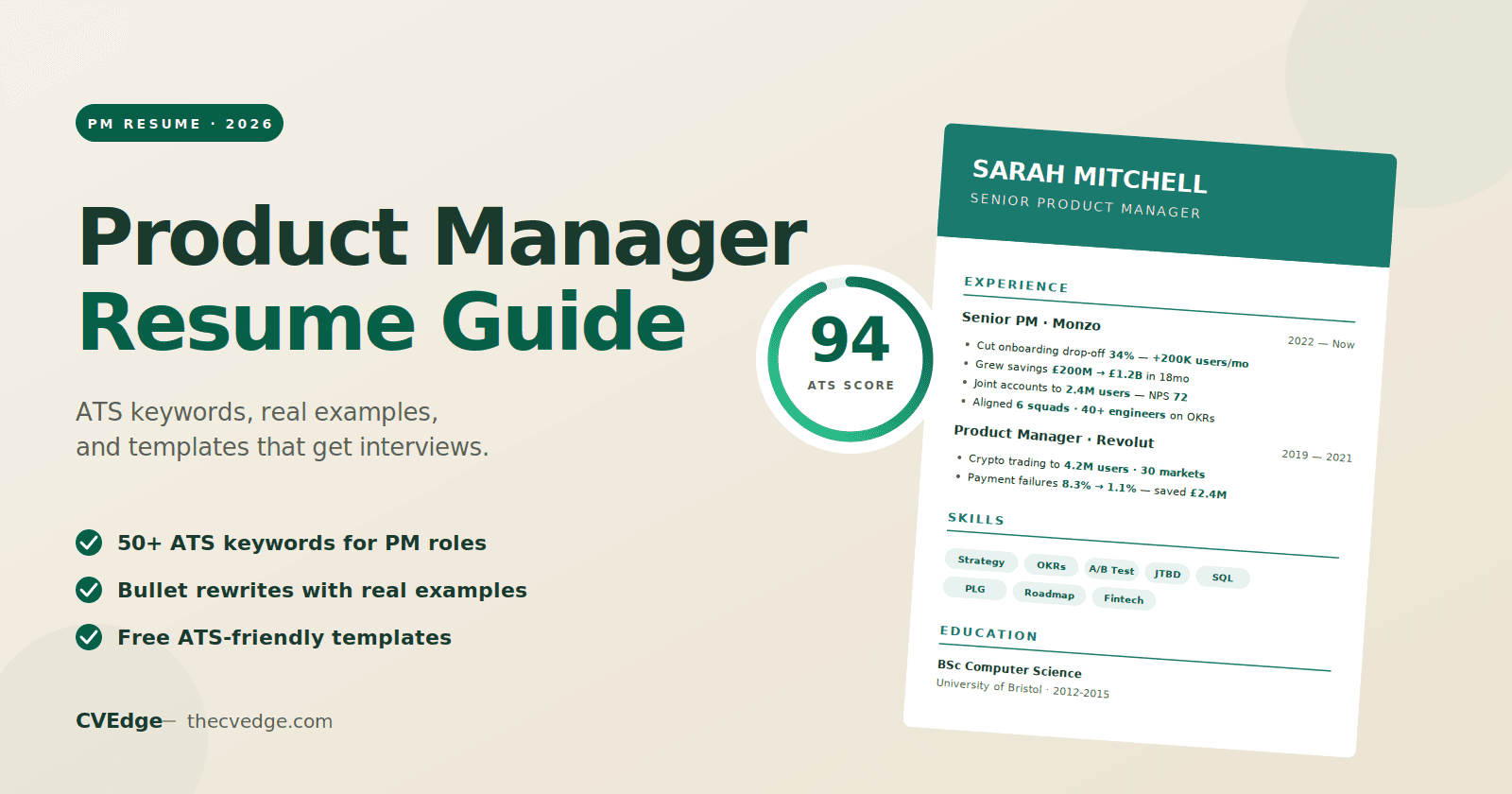
Product manager with 6 years in B2B SaaS, most recently owning onboarding for a $40M ARR analytics product. Lifted trial-to-paid conversion from 9% to 14% in a year through instrumented experiments and a rebuilt setup flow.
Registered nurse
Registered nurse (BSN, RN) with 5 years in a 32-bed medical-surgical unit and 2 years as charge nurse. Precepted 11 new graduates; unit fall rate dropped 35% during the mobility protocol I led.
Account executive
Enterprise account executive with 7 years selling HR software to companies of 1,000 to 10,000 employees. Closed $3.1M in new ARR in 2025 at 127% of quota; average deal size $85K.
Marketing manager
Marketing manager with 6 years in demand generation for fintech. Built the paid and lifecycle program that grew qualified pipeline from $4M to $11M a year while cutting CAC 28%.
Data analyst
Data analyst with 4 years in retail analytics, fluent in SQL, Python and Tableau. Built the inventory forecasting dashboards that cut stockouts 19% across 140 stores.
Financial analyst
FP&A analyst with 5 years at a $600M manufacturer. Own the annual budget and rolling forecast for three plants; variance analysis I introduced cut forecast error from 8% to 3%.
Project manager
PMP-certified project manager with 9 years delivering ERP and infrastructure programs up to $12M. Delivered the last four programs on schedule with an average 4% budget variance.
Customer success manager
Customer success manager with 5 years in mid-market SaaS, managing a $6M renewal book. Held net revenue retention at 112% for two consecutive years and cut time-to-first-value from 45 to 21 days.
Teacher
High school mathematics teacher with 7 years, certified in Texas for grades 7 to 12. Raised Algebra I end-of-course pass rates from 71% to 89% over three years through a mastery-based retake system.
DevOps engineer
DevOps engineer with 6 years running AWS platforms for consumer apps. Took deployment frequency from weekly to 30 a day and cut change-failure rate to under 5% with a GitHub Actions and Terraform rebuild.
UX designer
Product designer with 5 years on mobile consumer products, most recently a fintech app with 2M monthly users. Redesigned the onboarding flow, lifting completion from 58% to 81%. Portfolio at the link above.
Accountant
CPA with 6 years in public accounting and industry, currently senior accountant at a $200M SaaS company. Cut month-end close from 10 days to 5 by automating reconciliations in NetSuite.
Operations manager
Operations manager with 8 years in e-commerce fulfilment, running a 120-person warehouse shipping 30K orders a day. Reduced cost per order 17% and improved on-time shipping to 99.2%.
New graduate
Computer science graduate (BS, May 2026, GPA 3.7) with two software engineering internships at a health-tech startup and a bank. Shipped a Python service that cut nightly report generation from 3 hours to 20 minutes.
Tailoring the Summary
The summary is the part of the resume most worth rewriting per application. Swap line two to match the posting's top requirement and keep the rest. If the job title in the posting differs from yours but means the same thing, use theirs in line one, since recruiters search for the title they wrote. The tailoring guide covers the five-minute version of this.
Summary or Objective?
Summary. An objective tells the employer what you want; a summary tells them what they get. The only case for stating what you want is a career change or relocation, and then it belongs as a short final fragment, not the opening line. See the career change resume guide for how to handle that.
Templates That Parse Cleanly
Harvard Resume Template: the single-column academic-standard layout and the most downloaded template on CVEdge. Set it to Letter and it is the safest US default.
Classic Resume Template: standard headings, no graphics, parses cleanly in Greenhouse, Workday, Lever and iCIMS.
Executive Resume Template: for senior candidates who need the summary and leadership scope to land before the role history.
Related Guides
- How to Write Resume Bullet Points That Show Impact
- How to Write a One-Page Resume
- US Resume Format 2026
Frequently asked questions
How long should a resume summary be?
Two to three lines, forty to sixty words. Anything longer is a paragraph, and paragraphs at the top of a resume are skimmed rather than read.
Should a resume summary include numbers?
Yes, at least one. A summary without a number reads as a claim; a summary with one reads as a record. Pick the single most impressive figure from your bullets.
Do I need a summary on an entry-level resume?
It helps if you have internships or projects to point to. Two lines: degree and date, then the one thing you built or achieved. Skip it if it would only restate the education section.
Should the summary mention what job I want?
Only when it narrows usefully, such as a target role in a specific domain, or a career change. Otherwise the summary should describe what you offer, and the application itself says what you want.
Next Step
Upload your resume to the free ATS resume checker to see what an employer's system extracts from it, then fix the gaps before you apply.