

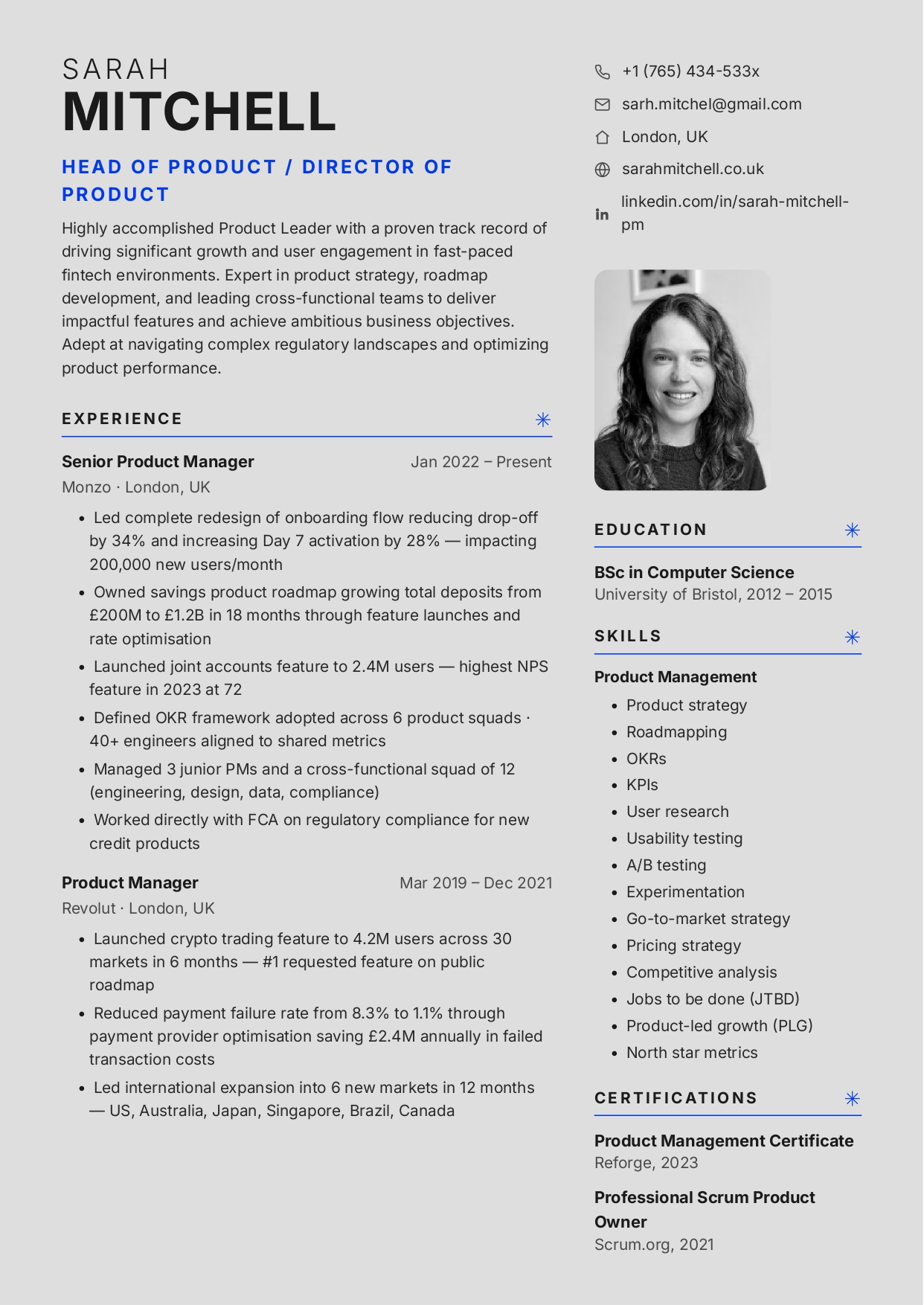
Portrait Resume for Creative Designers
Editorial split-weight name, headshot, and plus-marker headings on a grey canvas.
No credit card · No watermarks · Switch templates any time
About this template
Portrait is CVEdge's most editorial template. The split-weight name treatment (bold first name, light surname) combined with a circular headshot and grey canvas creates a resume that looks more like a portfolio page than a document — which is precisely the signal for senior creative, editorial, and design direction roles.
The plus-marker section headings create visual rhythm without decoration. Every element has a purpose: the weight contrast shows typography taste; the grey canvas shows restraint; the photo integration shows confidence in personal brand.
For graphic designers, editorial directors, type designers, and creative professionals from design-focused backgrounds, Portrait demonstrates the same visual judgment you'd apply to client work — but applied to yourself.
Portrait is a conversation-starter in shortlist reviews: it's distinctive enough that hiring committees remember which candidate had it. For portfolio-stage hiring processes, that's valuable.
Who is this template for?
- Graphic designers and type designers
- Editorial directors and creative directors
- Design graduates from design schools
- Creative professionals targeting design agencies
Start with this template — free
Upload your existing CV or start from scratch. CVEdge pre-fills your content into the template and gives you an instant ATS score.
Why this template works for creative roles
Portrait uses a split-weight name treatment, a photo and plus-marker headings on a grey canvas. It is designed for candidates whose CV is read partly as a work sample — product designers, art directors, illustrators — where a purely functional document can read as indifference to craft.
Recommended section order
- 1Header: name, photo, title
- 2Selected work
- 3Experience
- 4Skills & tools
- 5Education
'Selected work' above employment history is the key inversion for creative roles. Reviewers want to see what you have made before they read where you worked, and a portfolio link belongs above the fold rather than buried in contact details.
What to put where
Header
Portfolio URL in the header, not the footer. It is the most important link on a creative CV and reviewers look for it immediately.
Selected work
Three projects with the problem, your specific contribution, and the outcome. On a team project, state precisely what was yours — reviewers assume the least when contribution is unclear.
Experience
Shorter than on a conventional CV, because the work section carries the case. Two or three bullets per role with outcomes.
Skills & tools
Tools grouped, plus craft skills. Do not use star ratings — they carry no information.
Common mistakes with this template
- No portfolio link, which for a creative application is close to disqualifying.
- Final visuals with no reasoning — reviewers assess decisions, not decoration.
- Ambiguous credit on team projects, which reads as overclaiming.
- A CV whose own typography is inconsistent, since the document is itself a work sample.
When to choose something else
Applications through corporate portals, or markets where photos are a liability will usually be better served by a clean single-column layout.
Questions about this template
When should I use Portrait vs Aurora for design roles?+
Portrait for senior/specialist roles at design agencies and studios where visual distinctiveness matters. Aurora for most mid-level roles and companies that use ATS portal screening.
Is Portrait ATS-safe?+
Portrait has a two-column structure that most modern ATS systems handle. However, it's optimised for direct submission and portfolio-stage processes rather than high-volume automated portals.
Does a creative resume still need to pass an ATS?+
It depends on the route. Studio and agency applications frequently go direct to a hiring manager or through a portfolio platform, where a designed CV is read by a person. In-house creative roles at larger companies usually route through the same portal as every other application, and there a designed layout carries genuine risk. The practical answer is to keep two versions: a designed one for direct applications, a plain one for portals.
What matters more, the CV or the portfolio?+
The portfolio, decisively — it is what gets you the conversation. The CV's job is to establish level, scope and context quickly, and to get the reviewer to the portfolio. That is why the link belongs in the header rather than the footer, and why 'selected work' sits above employment history. A strong CV rarely rescues a weak portfolio; a strong portfolio frequently survives an ordinary CV.
Template features
- Split-weight name typography demonstrates design literacy
- Circular headshot professional and distinctive
- Grey canvas creates editorial feel
- Plus-marker headings create visual rhythm
- Memorable in shortlist review — stands out in stacks
More creative roles templates
View all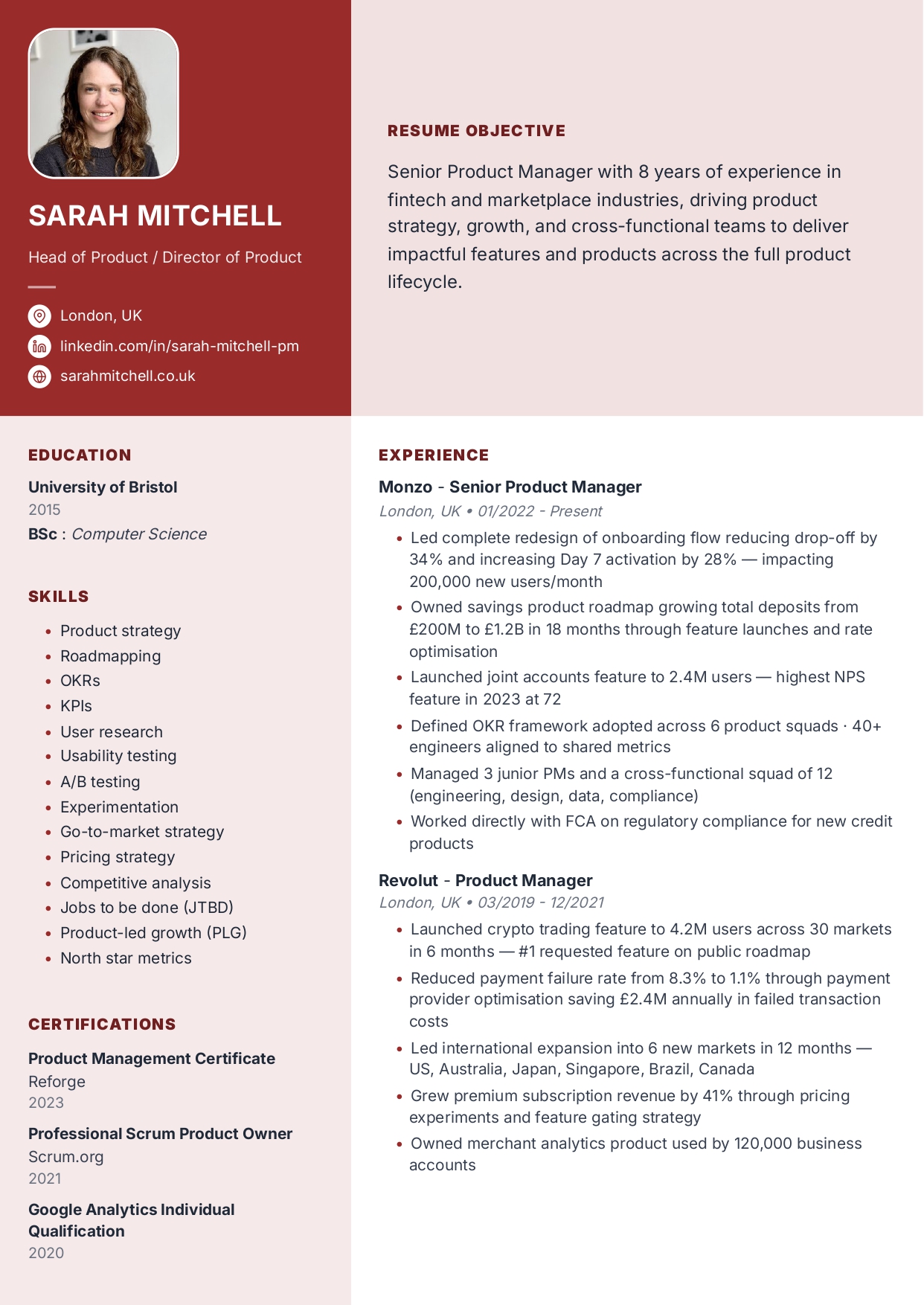
Electric Lilac Resume for Creative Roles
Vibrant sidebar, bold columns. You get noticed before they read a word.
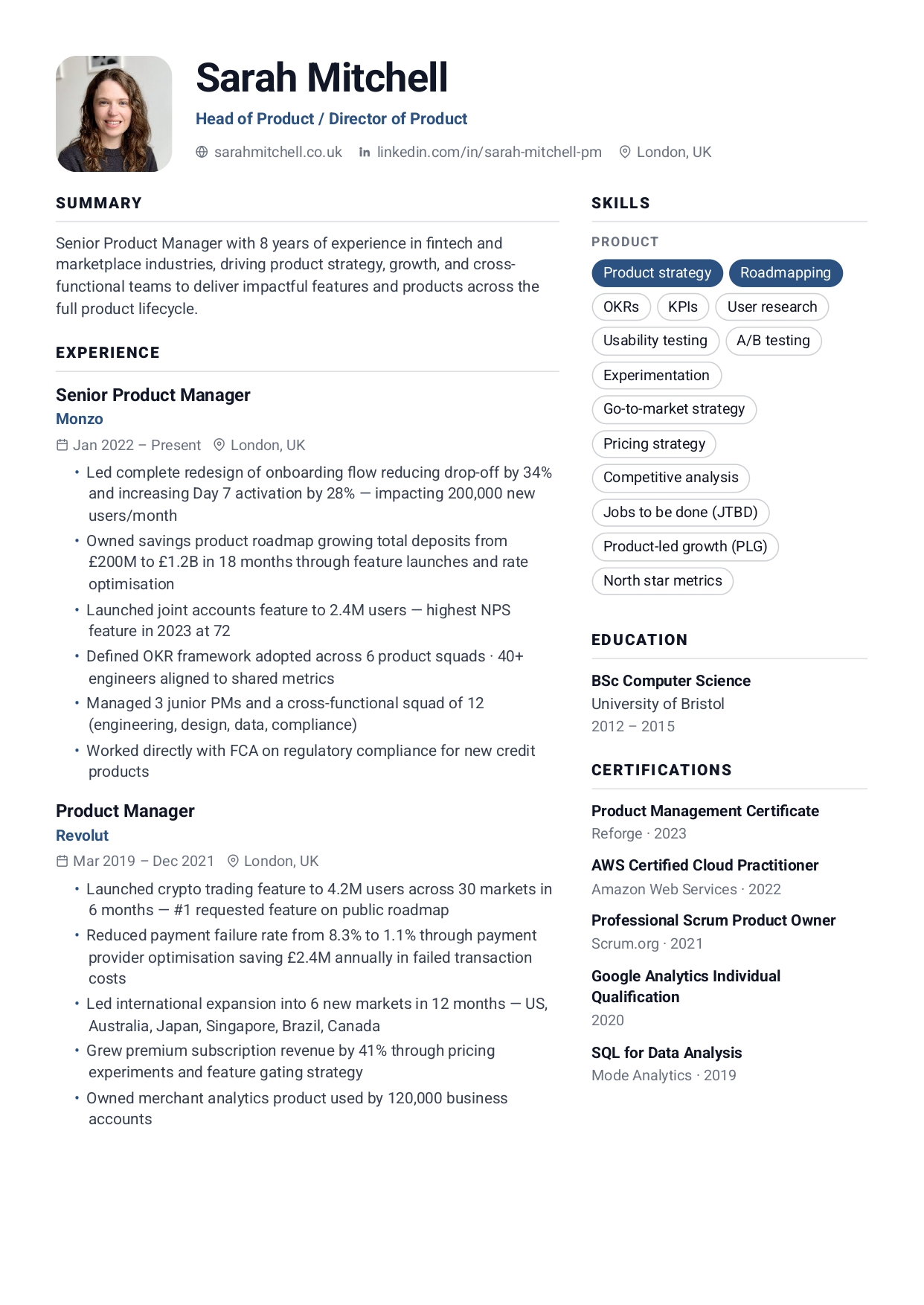
Aurora Resume for Creative Professionals
Chips, avatar, two columns. Portfolio-meets-resume energy for creative roles.
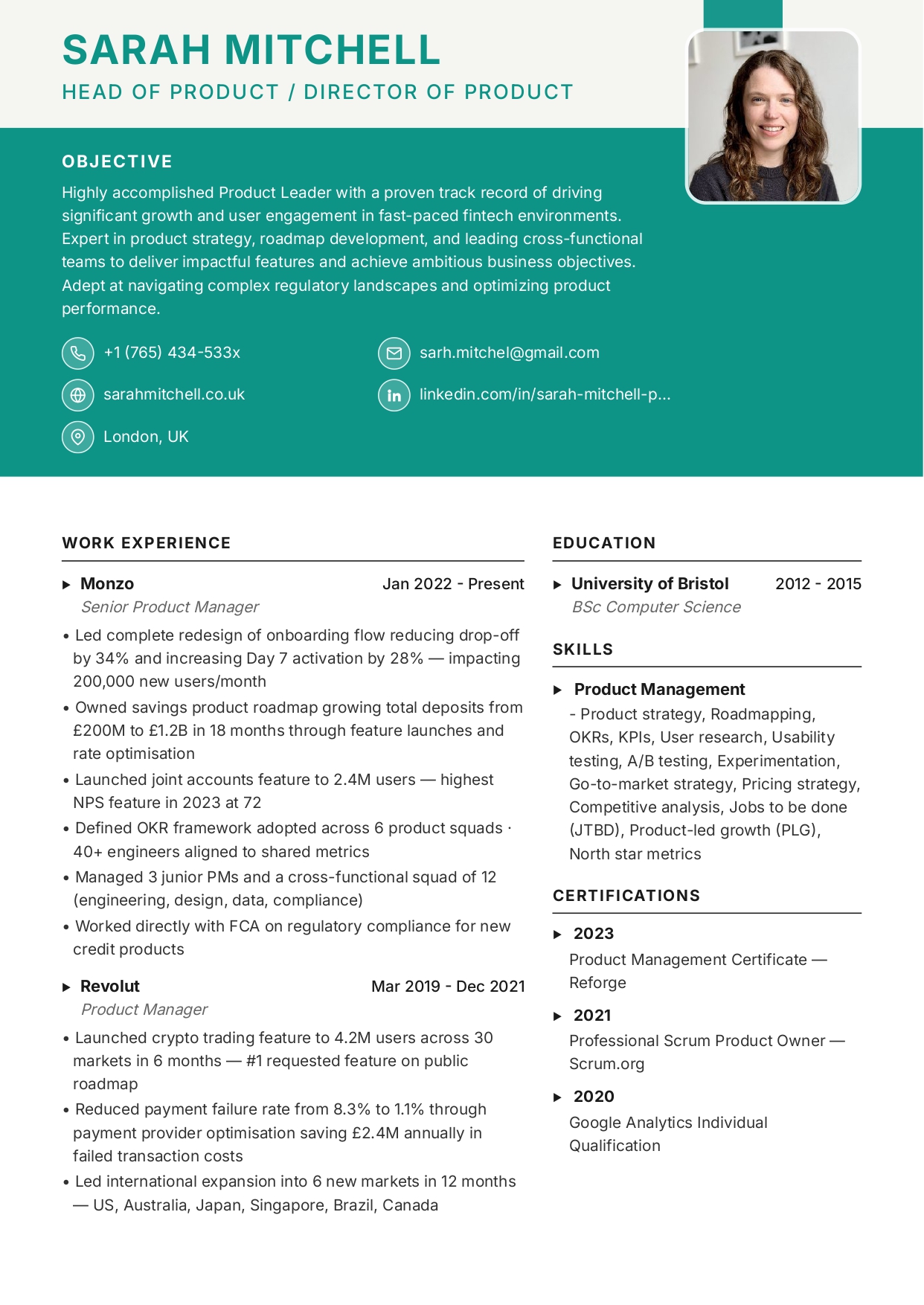
Coastal Resume for Creative Professionals
Teal header band with photo and objective band. Strong personal branding.
Build your resume with Portrait — free
Upload your existing CV or start fresh. ATS score included. No credit card required.